
Library supply bins
Library Coloring Program Supply Bin Labels
Supply bin labels help library staff reset coloring tables faster by separating markers, pencils, paper, cleanup supplies, finished pages, source notes, refill timing, and program dates.
Supply Bin Labels
Program Supply Bin
Label bins by tool, paper type, cleanup step, finished page routing, source notes, and refill timing.
Marker bin
Shared kids tables and family programsWashable markers: cap check before closing
Pencil cup
Quiet coloring stations and adult sessionsReady colored pencils / dull pencils
Paper bin
Programs using markers or mixed suppliesColoring pages / backing sheets / test paper
Cleanup bin
Fast reset between groupsTable reset: wipes, caps, scraps, drying pages
Direct answer
Library coloring program supply bin labels should show the supply type, program date or station, refill timing, cleanup step, source note location, and where finished pages go after patrons leave the table.
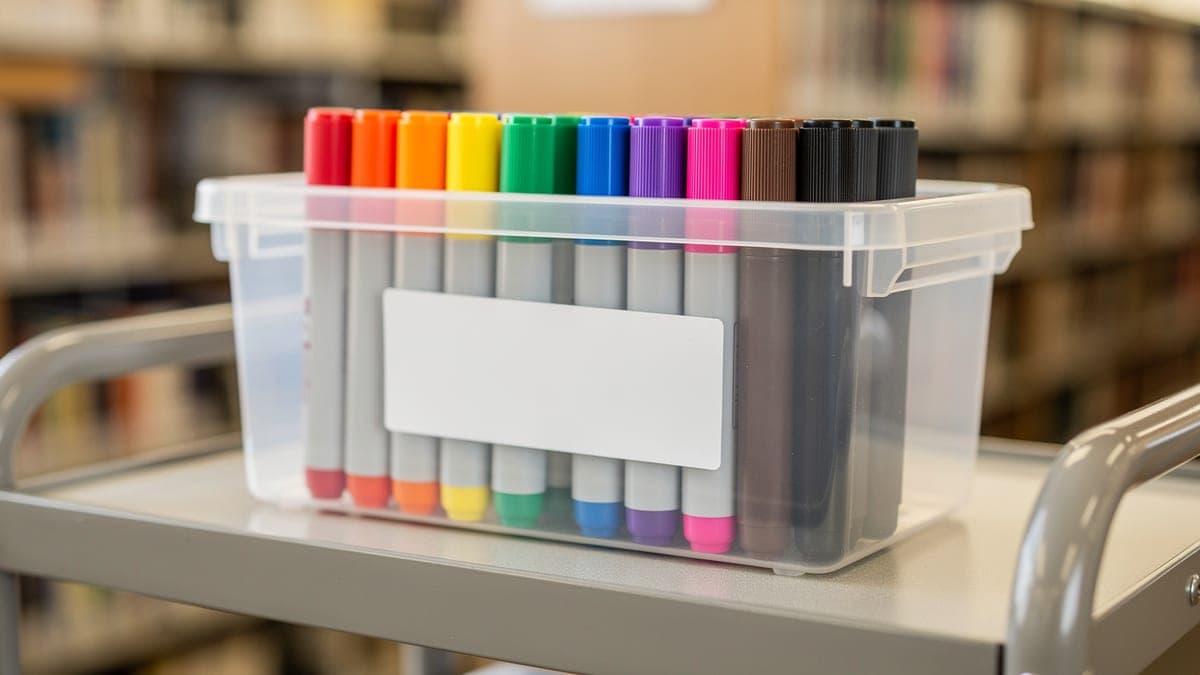
Supply bin label types
Label the task, not only the container. A clear bin label tells staff whether a supply is ready to use, waiting for cleanup, missing refills, or connected to a finished-page decision.
| Label | Best for | What to write |
|---|---|---|
| Marker bin label | Washable markers, dual-tip markers, cap checks, and shared coloring tables | Label by marker type, cap check, age group, and whether markers stay at the program table. |
| Pencil cup label | Colored pencils, sharpened pencils, short pencils, and quiet coloring stations | Separate ready pencils from dull pencils so staff know what needs sharpening before the next program. |
| Paper bin label | Printer paper, cardstock, scrap paper, backing sheets, and test pages | Mark paper by use so patrons do not color on source notes, staff copies, or backing sheets by mistake. |
| Cleanup bin label | Wipes, table covers, scrap trays, cap return cups, and drying reminders | Keep cleanup supplies visible so staff and volunteers can reset the table between groups. |
| Finished page bin label | Dry pages, pickup folders, display candidates, no-name pages, and pages waiting overnight | State where finished pages go next: pickup, display, archive, recycle, or dry before handling. |
| Source note bin label | Printable masters, permission notes, program packets, and staff-only source records | Keep source notes away from public coloring sheets but close enough for staff to check later. |
| Age group label | Toddler tables, family programs, teen nights, adult coloring, and mixed-age events | Use age labels for supply fit, not as a promise. Pair simple pages with simple supplies. |
| Refill timing label | Recurring programs, summer reading tables, mobile carts, and volunteer-led stations | Add a refill or review date so bins are not empty when the next program starts. |
Wording examples
Marker bin
Shared kids tables and family programs
Washable markers: cap check before closing
Pencil cup
Quiet coloring stations and adult sessions
Ready colored pencils / dull pencils
Paper bin
Programs using markers or mixed supplies
Coloring pages / backing sheets / test paper
Cleanup bin
Fast reset between groups
Table reset: wipes, caps, scraps, drying pages
Finished pages
Pages leaving the activity table
Finished pages: pickup, display, or dry overnight
Refill note
Recurring library programs and carts
Check before next program: ____
Bin setup choices
Table supply bin
Drop-in coloring tables, storytime, family programs, and summer reading
Use one large outside label and smaller inside labels for markers, paper, and cleanup.
Marker cup tray
Shared washable markers, cap checks, and color sorting
Use a separate return cup when caps and markers need to be matched after the program.
Pencil sharpening tray
Colored pencils, hand sharpeners, short pencils, and volunteer reset tasks
Label dull pencils clearly so patrons do not keep picking up pencils that are hard to use.
Paper stack bin
Coloring pages, cardstock, backing sheets, scratch paper, and test sheets
Separate blank coloring pages from backing sheets and staff source copies.
Finished page tray
Drying pages, no-name pages, display choices, and pickup routing
Place it near the exit or staff desk so finished pages do not stay mixed with supplies.
Mobile program cart
Branches, community rooms, outreach visits, and shared storage rooms
Label both the bin and the shelf location so supplies return to the same place.
Refill and reset timing
| Timing | Check | Action |
|---|---|---|
| Before each program | Markers, paper, backing sheets, wipes, and table covers | Refill visible supplies and remove dried-out markers before patrons arrive. |
| During long programs | Marker caps, loose pencils, scrap paper, and finished page tray | Reset small bins during a quiet moment rather than after the table is crowded. |
| After closing | Dull pencils, no-name pages, wet pages, and leftover printables | Move pages into pickup, display, archive, recycle, or drying decisions. |
| Weekly | Recurring station inventory and damaged supplies | Use one refill label so staff know what to restock before the next week. |
| Before seasonal programs | Summer reading, holiday themes, outreach kits, and backup supplies | Use program date labels and keep extras separate from regular drop-in bins. |
Supply bin checklist
Before setting up bins
- Choose whether supplies are sorted by tool, paper, age group, program date, or table task
- Label staff-only source notes separately from public coloring pages
- Create one place for dull pencils, missing caps, and dried-out markers
- Set a refill date for recurring programs
- Keep finished pages out of the active supply bin
During the program
- Keep paper, backing sheets, and test sheets in separate stacks
- Use a visible cap return cup when markers are shared
- Move wet or marker-heavy pages to a drying tray
- Keep no-name pages separate before pickup or recycling decisions
- Use short labels that volunteers can understand quickly
After cleanup
- Move finished pages to pickup, display, archive, or recycle
- Sharpen dull pencils before returning them to the ready cup
- Discard dried-out markers and note replacement needs
- Refill paper and backing sheets before the next program
- Update labels when a bin moves to a cart, shelf, desk, or storage room
For shared storage
- Add branch, room, or shelf names to mobile bins
- Use removable labels when the same bin changes by season
- Keep adult coloring supplies separate from kids table supplies when needed
- Store cleanup supplies with the activity bin, not in a separate mystery drawer
- Review old program bins before printing more supplies
Program pairings
| Program | Label | Setup |
|---|---|---|
| Storytime coloring table | Marker bin label | Use washable markers, simple paper stacks, cap return, and a finished page tray. |
| Summer reading craft table | Program date label | Label bins by date, theme, refill timing, and pickup or display routing. |
| Teen coloring night | Pencil cup label | Separate ready pencils, dull pencils, sharpeners, and detailed pages. |
| Adult coloring session | Paper bin label | Separate regular paper, cardstock, test sheets, and source notes. |
| Self-serve coloring station | Refill timing label | Use a weekly review label so the station does not run out between staff checks. |
| Community outreach kit | Mobile program cart label | Add branch, room, return shelf, and missing-supply notes. |
Keep source notes out of the public stack
A supply bin can hold coloring pages and tools, but staff source notes should be separate. Keep source records in a folder, sleeve, or archive box so public pages stay simple and staff can still check reuse details later.
Check printable rightsHelpful bin supplies
Start with labels and one reset routine. Add bins, cups, sorters, or carts only when they solve a real program setup problem.
| Supply | Best for | What to know | Compare |
|---|---|---|---|
| Plastic supply bins | Marker bins, paper stacks, cleanup supplies, and recurring program kits | Clear bins make it easier to see what needs refilling before a program starts. | Compare on Amazon |
| Removable labels | Seasonal programs, changing table setups, and reusable bins | Removable labels help bins change from summer reading to weekly storytime. | Compare on Amazon |
| File folder labels | Small bins, cups, trays, refill notes, and program date labels | Folder labels are easy to read on shallow trays and supply cups. | Compare on Amazon |
| Desktop file sorter | Paper stacks, backing sheets, source notes, and finished page routing | A sorter keeps paper types separate without taking over the table. | Compare on Amazon |
| Pencil cups | Ready pencils, dull pencils, short pencils, markers, and cap return cups | Use separate cups when supplies need different reset steps. | Compare on Amazon |
| Rolling cart | Mobile library programs, shared rooms, outreach kits, and seasonal storage | A cart works when bins move between rooms or branches. | Compare on Amazon |
| Binder clips | Keeping label sets, extra pages, family pages, and backing sheets together | Clips help when folders or trays are too large for a small program kit. | Compare on Amazon |
| Paper trimmer | Cutting repeated bin labels, date labels, and refill slips | A trimmer helps label sets look consistent across bins. | Compare on Amazon |
Useful contexts
Library program setup pages, summer reading craft tables, teacher supply organization posts, homeschool co-op resources, and community center activity guides can use supply bin labels as a practical reset tool.
Helpful wording includes library coloring program supply bin labels, marker bin labels, pencil cup labels, paper bin labels, cleanup bin labels, and coloring table reset notes.
FAQ
What should library coloring program supply bin labels include?
Include the supply type, program name or date, age group when useful, refill timing, cleanup step, and where finished pages or source notes should go.
How should library coloring supplies be sorted for programs?
Sort by task: markers, pencils, paper, backing sheets, cleanup, finished pages, source notes, and refill needs. Task labels are easier for staff and volunteers than vague theme labels.
Should markers and colored pencils be in the same bin?
They can share a larger program bin, but use separate cups or trays inside it. Markers need cap checks and bleed-through planning, while pencils need sharpening and short-pencil sorting.
Where should finished coloring pages go during library programs?
Use a separate finished page tray or pickup folder. Label whether pages are drying, ready for pickup, waiting for display, no-name pages, archive examples, or recycle extras.
How often should library coloring program bins be refilled?
Check bins before each program and again after cleanup. For self-serve stations, add a weekly review label so staff know when paper, markers, and cleanup supplies need attention.
Do library supply bins need source note labels?
Yes when printables, donated pages, or staff-created packets are used. Keep source notes staff-facing and separate from public coloring sheets.