
Library display signs
Library Coloring Page Display Sign Template
Library coloring displays work best when patrons know what to color, where finished pages go, how long the display stays up, and when pages can be picked up. A simple sign set keeps the program clear without crowding the art.
Library Program Template
Coloring Display Signs
Use one main program sign, one pickup sign, and small table labels so patrons can color, display, and collect finished pages without staff repeating the same directions.
Program display sign
Storytime, summer reading, teen craft nights, adult coloring tables, and community eventsName the program, display window, and where finished pages will be returned or picked up.
Pickup window sign
Pages that dry overnight, public displays, and programs where participants leave earlyState when pages can be picked up and where unclaimed pages will be stored.
Age or level sign
Kids tables, teen programs, adult coloring sessions, and mixed-difficulty printablesUse simple labels such as kids, teens, adults, easy, detailed, or large print.
Source note sign
Third-party printables, donated pages, library-created pages, and public display boardsKeep source notes short and readable, then store fuller permission details in the program folder.
Table label
Coloring stations, supply tables, pickup bins, drying areas, and group activity tablesLabel each table by activity, age group, supply type, or pickup status.
Return folder sign
Finished pages coming down from display, no-name pages, and pages waiting for pickupPoint participants to the folder, box, or cart where finished pages will be held.
Direct answer
A library coloring page display sign should state the program name, display dates, pickup window, page source note, and where finished pages should go. Use smaller table labels for age levels, supplies, drying pages, and return folders.
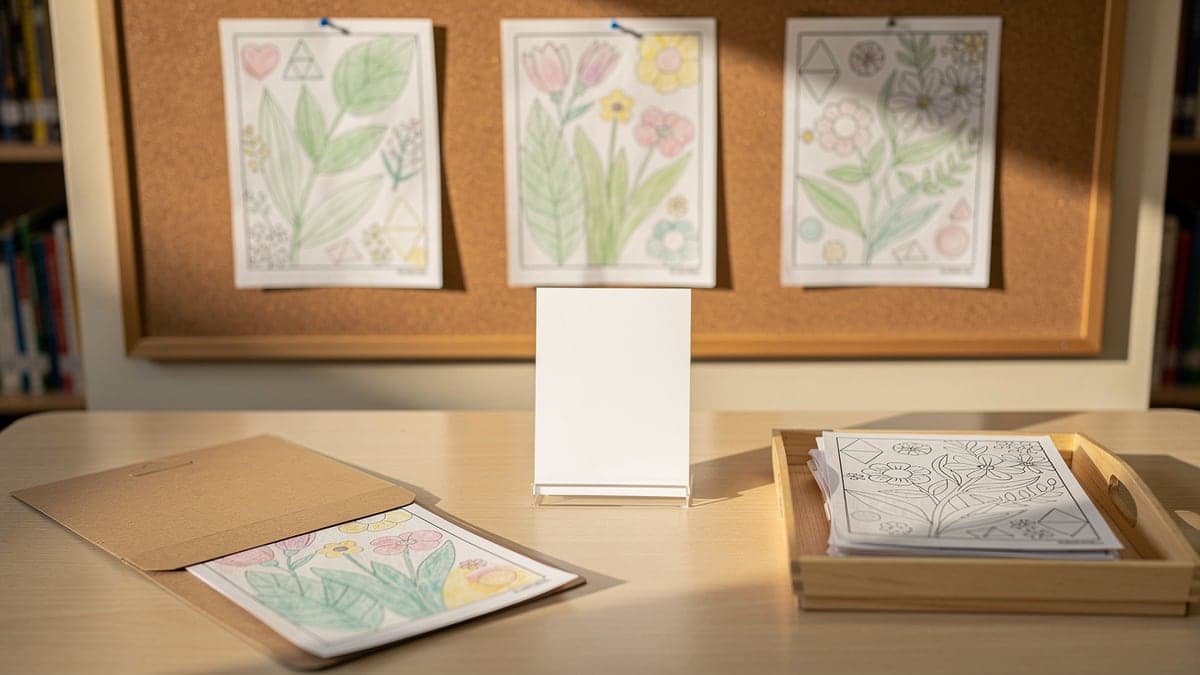
Library display sign types
Choose one main sign for the display, then add smaller table and folder signs only where patrons need direction.
| Sign | Best for | What to write |
|---|---|---|
| Program display sign | Storytime, summer reading, teen craft nights, adult coloring tables, and community events | Name the program, display window, and where finished pages will be returned or picked up. |
| Pickup window sign | Pages that dry overnight, public displays, and programs where participants leave early | State when pages can be picked up and where unclaimed pages will be stored. |
| Age or level sign | Kids tables, teen programs, adult coloring sessions, and mixed-difficulty printables | Use simple labels such as kids, teens, adults, easy, detailed, or large print. |
| Source note sign | Third-party printables, donated pages, library-created pages, and public display boards | Keep source notes short and readable, then store fuller permission details in the program folder. |
| Table label | Coloring stations, supply tables, pickup bins, drying areas, and group activity tables | Label each table by activity, age group, supply type, or pickup status. |
| Return folder sign | Finished pages coming down from display, no-name pages, and pages waiting for pickup | Point participants to the folder, box, or cart where finished pages will be held. |
Sign sizes
| Size | Best for | Note |
|---|---|---|
| Full letter sign | Program boards, display walls, hallway signs, and pickup instructions | Use when the sign needs to be read from a distance. |
| Half-sheet sign | Table instructions, source notes, and small display areas | A good default for most coloring program tables. |
| 4 x 6 inch card | Acrylic stands, supply labels, pickup bins, and tabletop signs | Fits many small sign holders without taking over the table. |
| Folded tent sign | Coloring stations, age labels, and self-serve table directions | Works when the table is viewed from both sides. |
| Folder tab label | Return folders, no-name pages, drying pages, and program archives | Use the same wording as the display sign so staff can sort quickly. |
| 2 x 3 inch mini label | Small bins, supply trays, page stacks, and pickup boxes | Keep mini labels to one short phrase. |
Where signs belong
At the display board
Program title, display dates, source notes, and pickup window
Put one main sign near eye level and keep individual page labels shorter.
On the coloring table
Age level, supply rules, drying notes, and page choices
Use a tent sign or acrylic stand so the table stays easy to reset.
Near the pickup folder
Finished pages, no-name pages, and pages coming down from display
Use the same pickup wording that appears on the main display sign.
On a supply cart
Markers, pencils, backing sheets, scraps, and take-home folders
Label supplies by what patrons should use, not by staff storage names.
Inside the program folder
Source permissions, display list, rotation date, and staff notes
Keep detailed notes off the public sign and in the staff folder.
Library sign checklist
Before the program
- Choose the display window before printing signs
- Decide whether pages go home the same day, next day, or after display
- Write one short source note for public display
- Prepare age or difficulty labels for page stacks
- Set up a no-name folder before participants arrive
Make the signs
- Use large readable type and plain wording
- Keep one instruction per sign when possible
- Use half-sheet or tent signs for table instructions
- Use a full-page sign for pickup windows and display dates
- Print a spare copy for the program folder
During display
- Move wet marker pages to a drying area before display
- Add names or initials before pages leave the activity table
- Use age labels only as guidance, not as a hard rule
- Keep source notes visible but short
- Check the pickup folder at the end of each program day
After display
- Move displayed pages into return folders on the posted date
- Keep unclaimed pages in one dated folder
- Archive only selected examples for program records
- Recycle duplicate test pages after the pickup window closes
- Save reusable signs in the program folder for the next event
Program sign pairings
| Program | Sign | Setup note |
|---|---|---|
| Storytime coloring table | Age or level sign | Use simple age labels and a pickup folder sign for pages that need to dry. |
| Summer reading display | Program display sign | Include the display dates and when pages can go home. |
| Teen craft night | Table label | Label detailed pages, supply areas, drying space, and finished-page pickup. |
| Adult coloring session | Source note sign | Keep page source notes clear and link them to the program folder. |
| Community center display | Pickup window sign | Use a full-page sign near the display and a matching return folder label. |
| Self-serve coloring station | Folded tent sign | Explain where blank pages, supplies, finished pages, and scraps should go. |
Rights-safe source note
Public library displays can use a short source note for coloring pages while keeping detailed permission information in the staff program folder. Reposting, selling, or redistributing original printable files is different from displaying finished pages.
Review the rights checklistHelpful library sign supplies
Start with cardstock and sign holders. Add dry erase pockets, removable labels, or folders only when the program repeats or pages need pickup tracking.
| Supply | Best for | What to know | Compare |
|---|---|---|---|
| Cardstock | Full-page signs, tent signs, table labels, and reusable program signs | Cardstock holds up better than printer paper on busy library tables. | Compare on Amazon |
| Acrylic sign holders | Tabletop program signs, pickup notes, and self-serve coloring stations | Acrylic holders keep signs upright and easy to move between programs. | Compare on Amazon |
| Dry erase pockets | Reusable display dates, pickup windows, and program instructions | Use pockets when the same sign changes by week or event. | Compare on Amazon |
| Laminating sheets | Signs that will be reused for storytime, summer reading, or craft nights | Laminate signs only after wording is stable. | Compare on Amazon |
| Removable labels | Folder tabs, pickup bins, no-name folders, and temporary display dates | Removable labels help staff change wording without replacing folders. | Compare on Amazon |
| Binder clips | Display rails, page stacks, temporary signs, and folder groups | Clips are useful when displays rotate quickly. | Compare on Amazon |
| Clipboards | Rotating coloring page displays and mobile library program signs | Clipboards let staff move signs and pages without tape. | Compare on Amazon |
| Pocket folders | Pickup folders, source notes, no-name pages, and program archives | Use one folder for each display stage so pages do not get lost. | Compare on Amazon |
Useful contexts
Library program pages, summer reading craft tables, homeschool resource lists, parent activity roundups, and community center craft guides can link to this as a practical sign system for public coloring displays.
Natural anchors include library coloring page display sign template, coloring page pickup sign, library coloring table signs, coloring program source note, and finished coloring page display pickup window.
FAQ
What should a library coloring page display sign include?
A library coloring page display sign should include the program name, display dates, pickup window, where finished pages will be returned, and a short source note when needed.
What size should library coloring display signs be?
Use a full letter-size sign for hallway or board instructions, a half-sheet sign for table directions, and 4 x 6 inch cards or tent signs for tabletop labels.
How should libraries handle coloring page pickup?
Post a pickup window, label a return folder or box, and keep unclaimed pages in one dated folder before archiving selected examples or recycling extras.
Do library coloring pages need source notes?
Source notes are useful for third-party printables, donated pages, and public displays. Keep the public note short and store full permission details in the program folder.
How do I label coloring pages by age at a library?
Use broad labels such as kids, teens, adults, easy, detailed, or large print. Treat them as guidance so patrons can choose the page that feels right.
Can a library display finished coloring pages before sending them home?
Yes. Post the display window and return date, then move pages to a labeled pickup folder when the display ends.