
Display label system
Classroom Finished Coloring Page Display Labels
Finished coloring pages are easier to display, rotate, and send home when every page has a simple label. Use names, dates, table groups, return dates, and source notes without crowding the artwork.
Classroom Display Template
Finished Page Labels
Keep labels short enough to read from the hallway, then use one board sign for longer rotation, pickup, or source notes.
Student name label
Classroom walls, hallway boards, daycare displays, and homeschool co-op tablesWrite the artist name clearly and place the label under the page or on the lower corner.
Date finished label
Weekly rotations, seasonal displays, portfolios, and parent pickup timingAdd the finished date so pages can rotate fairly and return home on schedule.
Display return date
Bulletin boards, library displays, classroom galleries, and program showcasesUse a return date when pages should come down and move into take-home folders.
Table or group label
Large classes, shared activity tables, library programs, and group displaysGroup labels make sorting faster when several pages come down at the same time.
Page source note
Printable pages, classroom handouts, library programs, and third-party worksheetsKeep a small source note near the display or in the teacher folder when permissions matter.
Technique or theme label
Color mixing lessons, seasonal boards, pattern practice, and art vocabularyName the theme, supply, or skill without making the label longer than the artwork.
Direct answer
A classroom finished coloring page display label should usually include the student name, date finished, display return date, and table or group when needed. Put longer source notes and pickup instructions on one board sign instead of on every page.
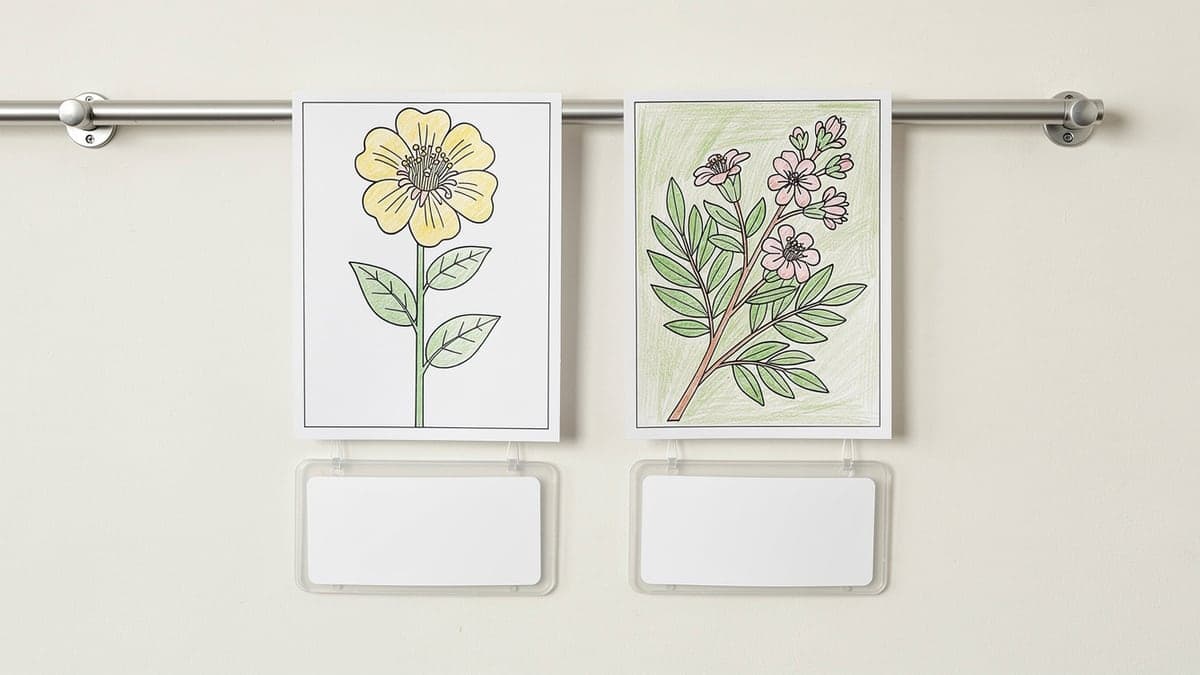
Display label types
Start with the information people need to identify and return the page. Add technique or source notes only when they make the display more useful.
| Label | Best for | What to write |
|---|---|---|
| Student name label | Classroom walls, hallway boards, daycare displays, and homeschool co-op tables | Write the artist name clearly and place the label under the page or on the lower corner. |
| Date finished label | Weekly rotations, seasonal displays, portfolios, and parent pickup timing | Add the finished date so pages can rotate fairly and return home on schedule. |
| Display return date | Bulletin boards, library displays, classroom galleries, and program showcases | Use a return date when pages should come down and move into take-home folders. |
| Table or group label | Large classes, shared activity tables, library programs, and group displays | Group labels make sorting faster when several pages come down at the same time. |
| Page source note | Printable pages, classroom handouts, library programs, and third-party worksheets | Keep a small source note near the display or in the teacher folder when permissions matter. |
| Technique or theme label | Color mixing lessons, seasonal boards, pattern practice, and art vocabulary | Name the theme, supply, or skill without making the label longer than the artwork. |
Label sizes
| Size | Best for | Note |
|---|---|---|
| 2 x 1 inch | Name labels, table groups, short dates, and small bulletin boards | Best when the display is viewed close-up. |
| 3 x 1 inch | Name plus date labels and hallway displays | A good default when parents or students read labels while walking by. |
| 4 x 2 inch | Library program labels, source notes, and display return dates | Use for labels that need more than one short line. |
| Half-sheet sign | Theme headers, classroom display rules, and pickup instructions | Use one sign for the board instead of repeating long instructions on every page. |
| Removable sticker label | Folders, display dates, temporary bins, and rotating boards | Use removable labels when boards change by season or program. |
| Cardstock tent label | Tabletop displays, library counters, and open house art tables | A tent label works when pages are displayed flat instead of on a wall. |
Where to place labels
Under the page
Bulletin boards, hallway galleries, and finished page walls
Keeps the artwork clean and makes labels easy to swap.
Lower corner
Clipboard rows, rails, and tight display spaces
Use only short names or initials so the label does not cover the page.
Board header
Theme, source notes, rotation dates, and class-wide instructions
Use one clear sign instead of repeating the same note on every page.
Folder tab
Pages waiting to go home after display
Match the display label to the take-home folder label when possible.
Back of page
Private names, source notes, dates, and portfolio sorting
Use the back when student privacy or display style matters.
Display label checklist
Before display
- Let marker, gel pen, glue, or watercolor pages dry fully
- Confirm names before pages leave the coloring table
- Choose one label size for the whole board
- Decide the display start date and return date
- Keep source notes nearby for third-party printables
Build the labels
- Use large readable names instead of decorative fonts
- Keep dates in the same format across the board
- Use group labels when pages will be sorted by table or class
- Put longer instructions on one board sign
- Print or write a few blank labels for late additions
Rotate fairly
- Use a weekly, monthly, seasonal, or program-end rotation
- Track which pages were displayed if fairness matters
- Move pages into take-home folders when the return date arrives
- Keep no-name pages in a visible holding folder
- Leave space for absent students or pages that dry overnight
Send home
- Remove tape or clips gently before stacking pages
- Sort pages by student, family, table, or pickup date
- Keep display labels if they help parents identify the page
- Archive only selected examples for class records
- Clear labels before the next display theme starts
Classroom and library setups
| Setting | Label to use | Setup note |
|---|---|---|
| Classroom bulletin board | Student name plus date finished | Use one label size under each page and a board header with the rotation date. |
| Hallway gallery | Name, class, and display return date | Use larger labels so families can read them during pickup or open house. |
| Library program display | First name, program date, and pickup window | Add a board sign explaining when pages can be picked up. |
| Daycare or preschool room | Name plus group color | Use simple labels and keep private details on the back of the page. |
| Homeschool co-op table | Name, family, and table group | Group labels make it easier to return pages after shared activities. |
| Open house art table | Cardstock tent label | Use folded labels when pages sit flat on tables instead of hanging on a wall. |
Rights-safe display note
Displaying student-finished pages in a classroom or library is usually a normal activity workflow, but reposting, selling, or redistributing the original printable is different. Keep source notes with third-party pages and follow the page license.
Review the rights checklistHelpful display label supplies
Choose supplies that make labels readable and easy to remove when the display rotates. Avoid permanent tape on pages that should go home cleanly.
| Supply | Best for | What to know | Compare |
|---|---|---|---|
| Removable labels | Temporary display dates, folder tabs, board labels, and rotating classroom bins | Removable labels are useful when boards change often. | Compare on Amazon |
| Cardstock | Readable display labels, tent labels, board headers, and library display signs | Cardstock keeps labels from curling on bulletin boards and tables. | Compare on Amazon |
| Paper trimmer | Cutting repeated label sizes and keeping classroom displays tidy | A trimmer helps labels look consistent across a whole board. | Compare on Amazon |
| Binder clips | Rail displays, page groups, temporary labels, and pages waiting to go home | Clips let you rotate pages without tape marks. | Compare on Amazon |
| Magnetic label holders | Whiteboards, metal display boards, and reusable classroom label zones | Use magnets when labels move often and the surface supports them. | Compare on Amazon |
| Dry erase pockets | Reusable display signs, rotation dates, and pickup notes | Reusable pockets help when the same sign changes by week or program. | Compare on Amazon |
| Sheet protectors | Saving labels with pages after display and building portfolio binders | Use sleeves for selected examples rather than every practice page. | Compare on Amazon |
| Take-home folders | Returning displayed pages after the rotation ends | Match folder labels to display labels so sorting is faster. | Compare on Amazon |
Useful contexts
Teacher organization blogs, classroom bulletin board guides, library program pages, homeschool co-op resources, and parent art display posts can link to this as a practical display and return system.
Natural anchors include classroom finished coloring page display labels, student art display labels, coloring page display return labels, classroom art board labels, and library coloring page display signs.
FAQ
What should a classroom coloring page display label include?
A classroom coloring page display label can include the student name, date finished, table or group, display return date, and a short source or theme note when needed.
Where should I put labels on finished coloring pages?
Put labels under the page for bulletin boards, in a lower corner for tight spaces, on the back for private details, or on a board header for class-wide instructions.
What size should classroom art display labels be?
A 3 x 1 inch label is a useful default for name and date. Use 4 x 2 inch labels or a half-sheet sign when the label needs instructions, source notes, or pickup timing.
How do I label coloring pages for a library display?
Use first name, program date, and pickup window labels. Add one board sign with source notes and the date when displayed pages will come down.
How do I keep coloring page displays fair in class?
Use a set display window, label return dates, leave space for late pages, and track which pages have been displayed if every student should get equal space.
Should finished coloring page labels stay on when pages go home?
They can stay on if they help identify the page. Remove temporary tape or board labels when they could damage the paper or cover the artwork.