
First Day of School Coloring Pages Printable
Plan first day of school coloring pages for arrival work, name pages, folder covers, display labels, take-home flow, crayons, washable markers, and paper setup.
 Written byM.R. SilvermanUpdated July 8, 2026 7 min read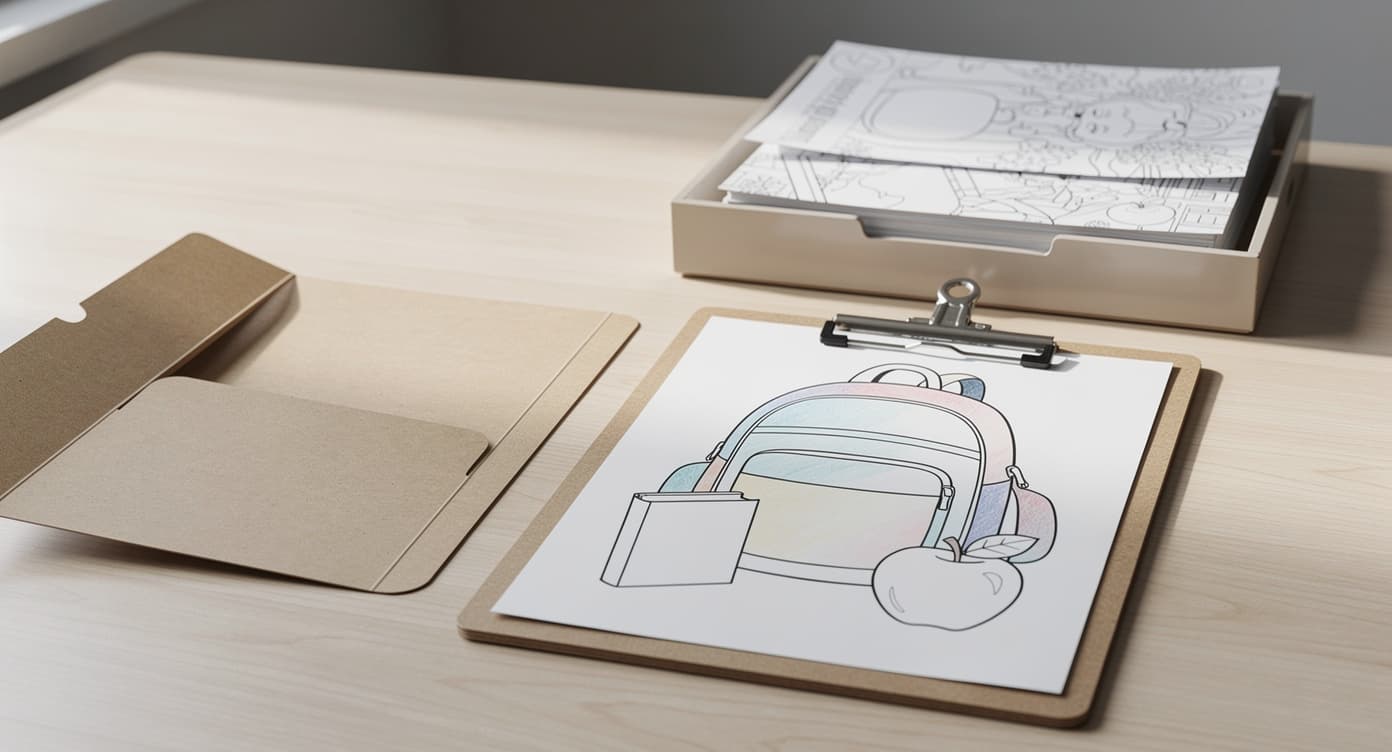
Direct answer
The best first day of school coloring pages are simple arrival-work pages with a name spot, a classroom or supply theme, and a clear next step: display, folder cover, take-home page, or early-finisher choice. Print a small packet on standard paper, start with crayons, and keep washable markers for larger pages with backing sheets and a reset plan.
Quick takeaways
- First-day coloring pages should be easy to explain in under one minute.
- Name pages, folder covers, classroom routine pages, and simple supply themes are the most reusable packet types.
- Crayons and standard printer paper are the safest first-day default; washable markers need backing sheets and cap checks.
- Plan the page destination before printing so finished pages do not become a loose paper stack.
Free page to use now
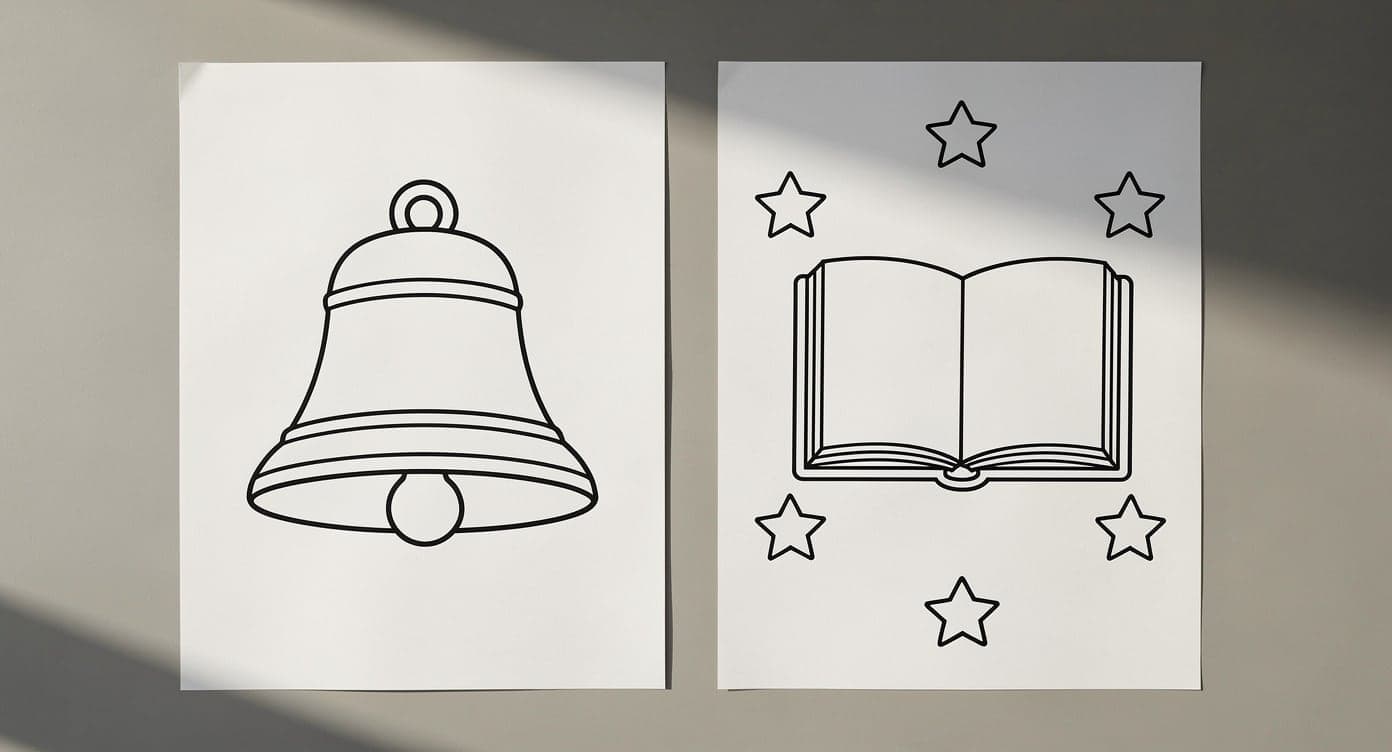
Print the school-day supplies page
Use an original school-supply sheet for a first-day table or activity folder.
Visual checks
Options to compare
Use these starting points to match the page, paper, and coloring style before you buy anything new.
| Option | Best for | What to know | Compare |
|---|---|---|---|
Standard printer paper Best default copy paper | Arrival work, name pages, folder covers, early-finisher pages, and first-day classroom packets | Use standard paper for crayon and colored-pencil pages; save heavier sheets for display or marker-heavy pages. | Compare on Amazon |
Bulk crayons Best low-mess first-day supply | Kindergarten, elementary classrooms, homeschool groups, library tables, and quick morning work | Crayons are easier to reset than markers and work well when the page has simple shapes and a name spot. | Compare on Amazon |
Washable markers Best bright color option | Large first-day posters, older kids, teacher-led tables, and pages that can dry before stacking | Use washable markers with backing sheets and a cap-check routine instead of treating them as a no-cleanup supply. | Compare on Amazon |
Pocket folders Best take-home packet organizer | Keeping arrival pages, parent notes, folder covers, and finished pages together on day one | Folders work best when each page has a name spot and the packet has a simple finished-page destination. | Compare on Amazon |
Removable labels Best quick naming helper | Folder labels, display boards, no-name pages, table groups, supply bins, and first-day sorting | Removable labels make it easier to adjust names and groups after the first-day roster changes. | Compare on Amazon |
Clipboards Best flexible work surface | Arrival tables, hallway work, library programs, floor coloring spots, and rooms with limited desks | A firm writing surface keeps pages from sliding and helps kids color neatly away from a desk. | Compare on Amazon |
Backing sheets Best page protection helper | Washable marker pages, display pages, table protection, and single-sided printable packets | Backing sheets are useful when markers are available or when finished pages need to stay clean for display. | Compare on Amazon |
Supply caddy Best table reset helper | Crayons, marker caps, labels, extra pencils, wipes, backing sheets, and early-finisher page choices | A small caddy helps adults reset the table quickly without turning first-day coloring into supply sorting. | Compare on Amazon |
Sources and testing notes
This guide compares intended use, paper fit, and practical tradeoffs. It is selection guidance rather than a hands-on product test unless a section says otherwise. Check the merchant page for current materials, set contents, availability, and safety information before buying.
Choose pages that work on day one
A first-day coloring page should be calm, readable, and useful after it is colored. The best choices are name pages, folder covers, classroom supply pages, simple backpack or book pages, table-group pages, and early-finisher choices.
Avoid pages that need a long explanation, tiny details, or many color rules. On the first day, the page is doing a practical job: helping everyone settle, label their work, learn a routine, or create something that can go home.
For mixed-age groups, print one very simple page and one slightly more detailed page. This keeps younger kids from feeling rushed and gives older kids a page that still feels worth finishing.
Build a small arrival-work packet
A useful first-day packet can be only three to five pages: one name page, one folder cover, one classroom supply page, one reading or kindness page, and one extra early-finisher page.
Print extra copies of the name page and the simplest page. Those are the pages most likely to need replacements when a new student arrives, a page gets lost, or someone finishes quickly.
Keep the packet generic enough for classrooms, homeschool co-ops, libraries, and family use. Pencils, books, crayons, backpacks, folders, stars, and simple kindness prompts are safer than copyrighted characters or brand mascots.
Set up the coloring table
Put the paper, crayons, name labels, and finished-page tray in obvious places. The fewer verbal steps you need, the better the first activity works.
Use crayons as the default supply because they do not need drying time and they work on ordinary printer paper. Add washable markers only for pages with wider spaces and a backing sheet under the page.
Keep an extra pencil and a small stack of blank backing sheets near the table. The page may be a coloring activity, but the hidden job is helping the room reset smoothly.
Decide where finished pages go
Before printing, decide whether finished pages will become a folder cover, a hallway display, a take-home page, a portfolio divider, or a simple arrival-work record.
If pages will be displayed, leave a name spot, date line, and enough border space for labels or tape. If they will go home, put them in a folder before dismissal so the first-day paper pile stays together.
For homeschool or library programs, a finished-page folder is often simpler than a display wall. It gives every page a destination without needing a permanent bulletin board.
Match supplies to the page
Use standard printer paper for most first-day pages. It is affordable, easy to copy, and works well with crayons and colored pencils.
Use heavier paper for pages that will be displayed, kept as folder covers, or colored with markers. If you use markers on standard paper, add a backing sheet and avoid stacking wet pages.
Use simple color expectations. A first-day page does not need perfect shading; it needs to give each child a comfortable way to start.
Make the packet reusable
Keep one clean sample page in a sheet protector or folder. It helps volunteers, substitutes, and families understand the packet without asking for a long explanation.
Save the packet by page type rather than by holiday. Name page, folder cover, supply page, reading page, kindness page, and early-finisher page are easier to reuse next year.
If you use free pages from another creator, keep the source note and terms with your planning file. Do not repost, bundle, sell, or upload printable pages unless the source clearly allows it.
Printable resource
Printable classroom coloring calendar pages
Plan monthly classroom coloring pages with themes, supplies, display timing, and take-home folder decisions.
Classroom coloring supply checklist
Build a classroom, homeschool, daycare, or library coloring table kit with supplies that are easy to reset.
Kids coloring activity folder guide
Set up a reusable kids coloring folder for rainy days, travel, homeschool, classrooms, and library activity tables.
Printable coloring page folder organization
Organize printable coloring pages by age, theme, season, source rights, paper type, and reprint priority.
Classroom finished coloring page display labels
Make classroom display labels for finished coloring pages with student names, dates, group labels, return timing, and source notes.
Classroom coloring page display return slip
Make classroom coloring page display return slips with return dates, parent notes, student names, take-home folders, and source notes.
Coloring page display permission note template
Make display permission notes for finished coloring pages with classroom wording, public hallway notes, source notes, parent communication, display windows, and take-home timing.
Finished coloring page take-home folder
Set up take-home folders for finished coloring pages with classroom timing, library pickup folders, student labels, drying pages, and storage before pickup.
Coloring page printer settings checklist
Choose scale, margin, grayscale, quality, paper type, and test print settings before batching pages.
Marker bleed-through test sheet
Use this printable swatch sheet before coloring a full page with markers.
Washable marker cleanup checklist
Use this parent and teacher checklist before washable marker coloring activities.
Coloring paper weight cheat sheet
Compare paper types before printing adult pages, kids pages, or marker-heavy designs.
FAQ
What are the best first day of school coloring pages?
The best pages are name pages, folder covers, classroom supply pages, backpack or book pages, kindness pages, and simple early-finisher pages with clear outlines.
How many coloring pages should I print for the first day?
Print three to five page types and extra copies of the simplest page. A small packet is easier to manage than a large stack of unrelated pages.
Are coloring pages good arrival work for the first day of school?
Yes, when they are simple, quick to explain, and easy to finish or pause. They work best with a name spot and a clear destination such as a folder, display, or take-home tray.
Should I use crayons or markers on the first day?
Crayons are the easiest default because they work on standard paper and do not need drying time. Washable markers can work for large pages when you use backing sheets and cap checks.
What paper is best for first-day coloring packets?
Standard printer paper is best for everyday first-day copies. Use heavier paper for display pages, folder covers, or marker-heavy pages.
Can I use free first-day coloring pages in class?
Only if the source allows classroom, homeschool, or library use. Free to print does not always mean free to repost, sell, bundle, or upload elsewhere.