
Coloring Pages for Dementia Activities
Choose coloring pages for dementia activities by respectful adult themes, bold outlines, small choices, safe supplies, caregiver setup, and no treatment claims.
 Written byM.R. SilvermanUpdated July 8, 2026 7 min read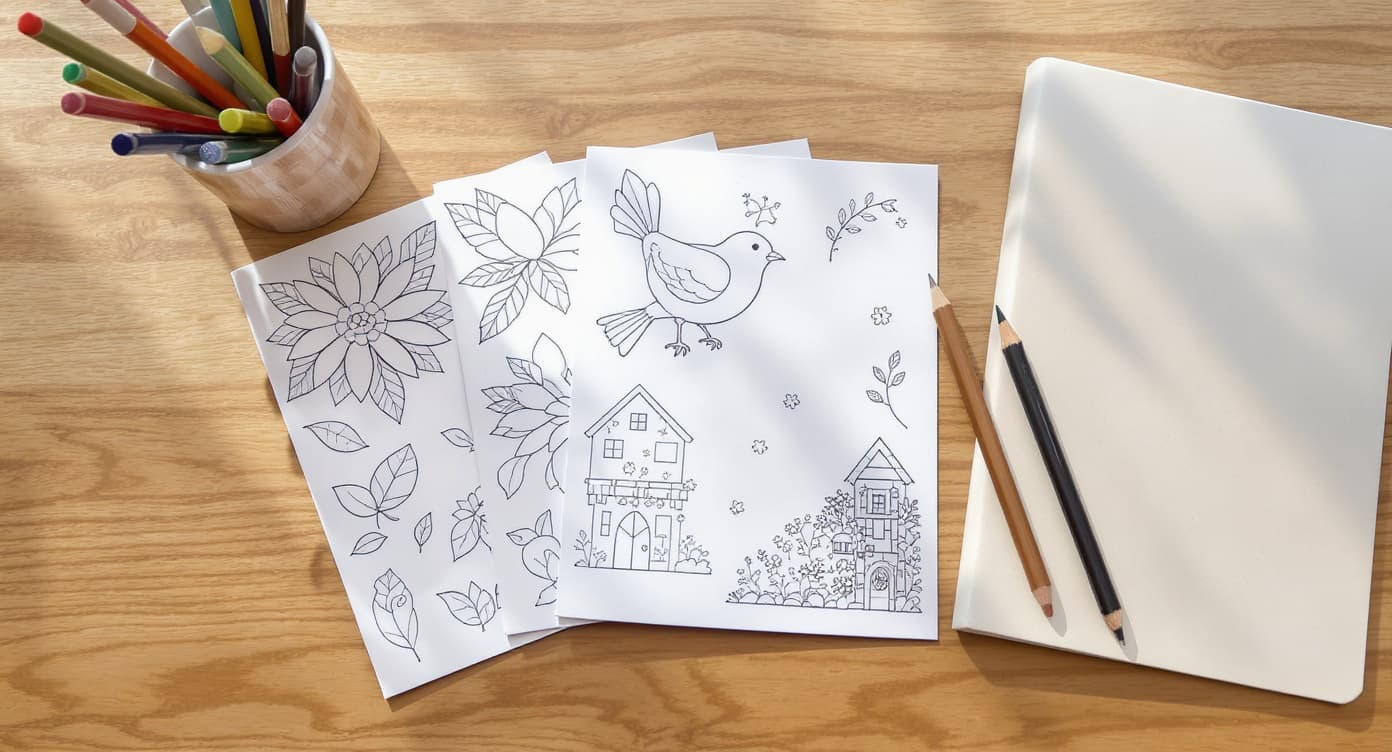
Direct answer
Coloring pages for dementia activities should be respectful, adult, easy to see, and simple to set up. Choose familiar themes with bold outlines, larger spaces, and a small set of choices. Use safe, easy-to-handle supplies, offer help only as needed, and treat coloring as an optional creative activity, not dementia care, memory treatment, or a guaranteed health benefit.
Quick takeaways
- Dementia-friendly coloring activities should feel adult, respectful, and optional.
- Use familiar page themes, bold outlines, larger spaces, and only a few page choices at a time.
- Soft colored pencils, heavyweight paper, a firm surface, and simple storage make the setup easier to repeat.
- Follow qualified care guidance for health, safety, behavior, or cognitive needs; do not frame coloring as treatment.
Visual checks
Options to compare
Use these starting points to match the page, paper, and coloring style before you buy anything new.
| Option | Best for | What to know | Compare |
|---|---|---|---|
Large-print adult coloring book Best ready-made page source | Readable outlines, adult themes, short sessions, and group activity tables | Look for interior previews with bold lines, open spaces, and familiar adult subjects. | Compare on Amazon |
Heavyweight printer paper Best printable page base | Loose activity pages, saved pages, light marker use, and caregiver folders | Print one test sheet first so line darkness, scale, and printer feed are checked before batching pages. | Compare on Amazon |
Soft colored pencil set Best first coloring tool | Ordinary printer paper, detailed areas, gentle color, and lower bleed-through risk | Choose a manageable color count that is easy to sort instead of a large tray that slows the start. | Compare on Amazon |
Comfort-grip colored pencils Best grip-friendly upgrade | Longer sessions, shared tables, and users who prefer a wider barrel | Prioritize comfort and control over the largest color count. | Compare on Amazon |
Broad-tip water-based markers Best bold-color option | Very open pages, short activities, single-sided sheets, and brighter color blocks | Use water-based markers with a backing sheet and a drying place; avoid marker-heavy pages until paper is tested. | Compare on Amazon |
Clipboard or lap desk Best steady surface | Loose pages, lap coloring, table activities, and people who dislike shifting paper | A firm surface can make a single page easier to hold, move, and set aside. | Compare on Amazon |
Pocket folder or binder Best page organizer | Blank pages, finished pages, source notes, and repeatable caregiver activity folders | Separate blank pages from finished pages so the setup is easy for another helper to repeat. | Compare on Amazon |
Small supply caddy and sharpener Best reset helper | Shared tables, senior-center activity kits, library programs, and caregiver setups | Keep supplies visible and limited so setup and cleanup do not become the activity. | Compare on Amazon |
Sources and testing notes
This guide compares intended use, paper fit, and practical tradeoffs. It is selection guidance rather than a hands-on product test unless a section says otherwise. Check the merchant page for current materials, set contents, availability, and safety information before buying.
Start with respect and choice
The page should match the person, not the diagnosis. Choose adult themes, familiar subjects, and pages that can be started without a long explanation.
Offer coloring as an invitation. A person may want to color, watch, talk about the page, choose colors, or stop after a few minutes. All of those outcomes can still be a useful activity moment.
Keep the choices small. Two or three page options and a small color set are often easier than a large stack of pages and every supply on the table.
Best page styles to try first
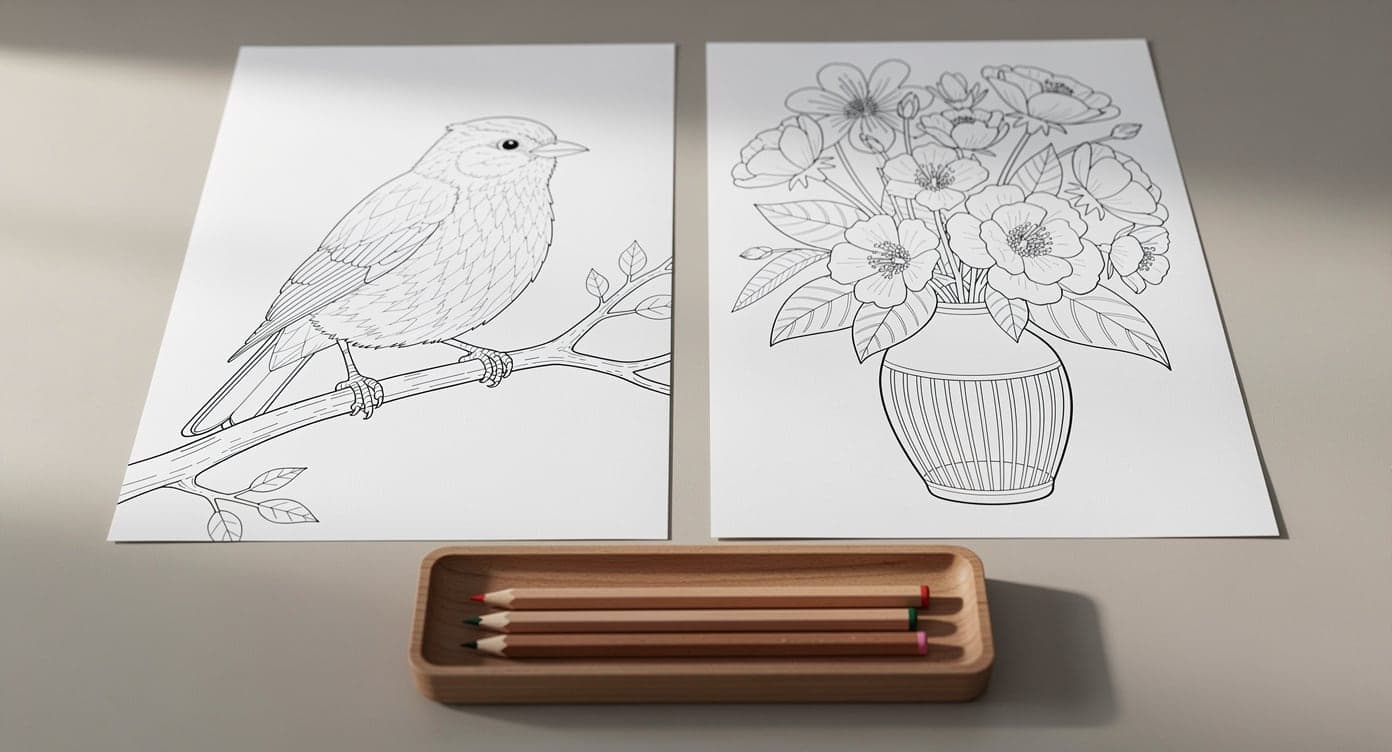
Flowers, leaves, birds, pets, gardens, simple landscapes, cozy rooms, holiday pages, and familiar objects are strong first themes because they are easy to recognize and talk about.
Use bold outlines and larger open spaces. Dense backgrounds, tiny patterns, faint gray lines, and cluttered fantasy pages can make the page harder to begin.
If the person has a known interest, start there: gardening, music, cooking, travel, pets, sports, faith, local places, or seasonal traditions. Familiarity is more useful than novelty.
Set up a short activity
Plan for a short session first. Put out one page, a few colors, a firm surface, and a place for the page to go when the person is done or wants to pause.
Give enough time and avoid rushing the page to completion. The activity does not need a finished result to be worthwhile.
Offer help quietly and only when useful. You might open the pencil box, point to a color choice, rotate the page, or start a small area, then step back.
Supply setup and safety boundaries
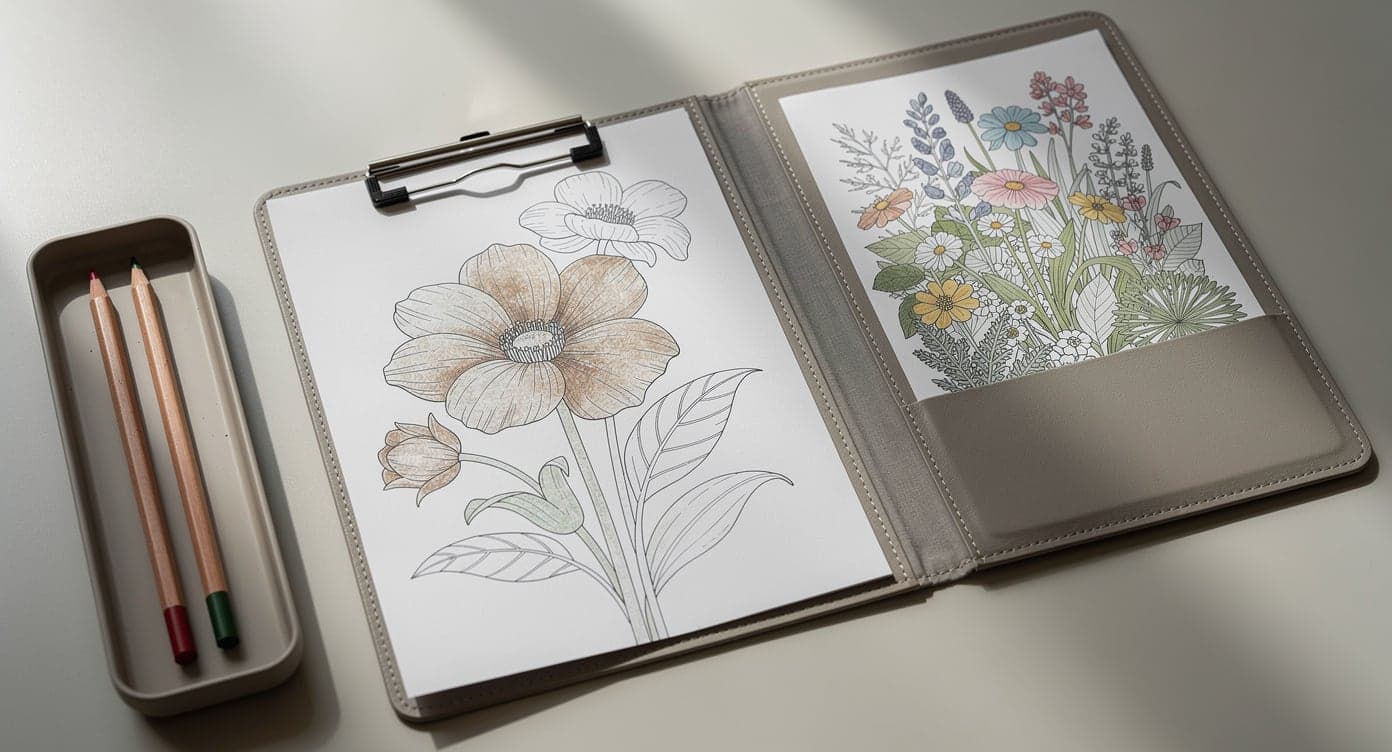
Soft colored pencils are usually the safest first choice because they work on most paper and are easier to control than wet media.
Water-based markers can work on very open pages, but test paper first and use a backing sheet. Keep caps, wipes, and drying space visible.
Follow the care setting rules for materials, supervision, small loose items, and cleanup. If safety, behavior, swallowing risk, vision, mobility, or medical needs are involved, follow guidance from qualified care professionals.
Caregiver, library, and senior-center setup
For shared tables, prepare a small packet: three readable pages, a few colors, backing sheets, one sharpener spot, and a finished-page folder.
Keep source notes with the packet so pages can be reprinted legally and another helper can repeat the same setup.
Use adult labels such as quiet coloring table, creative break, garden coloring pages, or large-print coloring activity. Avoid wording that promises memory improvement, dementia therapy, or clinical results.
When to pause or switch
Pause if the page feels frustrating, the person seems tired, or the supply choice is getting in the way. Switching to a simpler page or talking about the picture may be better than pushing through.
If color choice is difficult, reduce the palette to two or three colors. If filling a whole page feels too much, color one flower, one border, or one object.
If the activity is not a good fit that day, keep the page for another time. A flexible setup is more respectful than forcing completion.
What to avoid
Avoid childish pages unless the person specifically enjoys them. Simple adult themes are usually more respectful.
Avoid pages with tiny detail, cluttered backgrounds, faint lines, or long instructions.
Avoid medical claims. Coloring can be a pleasant creative or social activity for some people, but it is not a substitute for dementia care, clinical therapy, supervision, or professional guidance.
Printable resource
Adult coloring setup checklist
Build a small adult coloring kit with pages, paper, pencils, lighting, storage, and an easy reset routine.
Coloring paper weight cheat sheet
Compare paper types before printing adult pages, kids pages, or marker-heavy designs.
Coloring page printer settings checklist
Choose scale, margin, grayscale, quality, paper type, and test print settings before batching pages.
Printable coloring page folder organization
Organize printable coloring pages by age, theme, season, source rights, paper type, and reprint priority.
Colored pencil storage checklist
Use this quick reset sheet to choose storage, sort colors, and keep pencils ready for the next page.
Finished coloring page display and storage
Decide whether finished pages should be displayed, stored flat, scanned, gifted, reused, or recycled.
Library coloring program table reset checklist
Reset library coloring program tables with paper restock, cap checks, dull pencils, finished page routing, no-name pages, cleanup supplies, source notes, and volunteer handoff.
FAQ
What are coloring pages for dementia activities?
They are coloring pages chosen for a respectful activity setup: adult themes, bold outlines, larger spaces, small choices, safe supplies, and enough time to participate without pressure.
Can coloring help dementia?
Coloring can be a pleasant activity for some people, but it should not be treated as dementia treatment, memory care, or a guaranteed health benefit. Follow qualified care guidance for health and safety needs.
What coloring page themes work best for dementia-friendly activities?
Familiar adult themes usually work best: flowers, gardens, birds, pets, simple landscapes, cozy rooms, seasonal pages, and subjects connected to the person's interests.
How many coloring pages should I offer at once?
Start with two or three page choices. Too many options can make the activity harder to begin, especially in a group setting.
Are child coloring pages okay for dementia activities?
Use adult themes unless the person specifically likes a childlike theme. A page can be simple without feeling childish.
What supplies are easiest for dementia-friendly coloring?
Soft colored pencils, a sharpener, heavyweight paper, a backing sheet, and a clipboard or lap desk cover most simple setups. Add markers only after testing the paper.
Should I use markers or colored pencils?
Colored pencils are usually easier to control and safer for thin paper. Broad-tip water-based markers can work on open single-sided pages with a backing sheet and supervision.
How long should a coloring activity last?
Keep the first session short and flexible. The goal is a comfortable activity moment, not finishing a page.