
Notebook cover guide
Coloring Page Journal Cover Template
Turn a finished coloring page into a notebook cover by measuring the real cover, choosing a front-panel or wraparound layout, and using light adhesive so the journal still opens flat. Keep the spine clear and save trimmed pieces for tabs or pockets.
Coloring Notebook
Journal Cover Template
Measure the notebook, choose a front panel or wraparound layout, and keep the spine edge clear so the cover opens easily.
Composition notebook
About 7.5 x 9.75 inchesUse a front-panel cover or half-cover band unless you have a large finished page.
Letter-size binder insert
8.5 x 11 inchesUse one full finished page as a cover sheet, then slide it into a clear pocket.
A5 journal
About 5.8 x 8.3 inchesTrim a finished page panel and leave a small border so the cover does not lift at the edge.
Pocket notebook
About 3.5 x 5.5 inchesUse scraps, corner pieces, or a wraparound strip from one finished page.
Homemade booklet
Measure the folded bookletWrap one lightweight finished page around the folded pages and crease gently.
Direct answer
The easiest coloring page journal cover template is a front-panel cover: measure the notebook, cut the finished coloring page slightly smaller, attach it with dry adhesive or a light glue stick layer, then press it flat. Use wraparound covers only for thinner notebooks that can still close neatly.
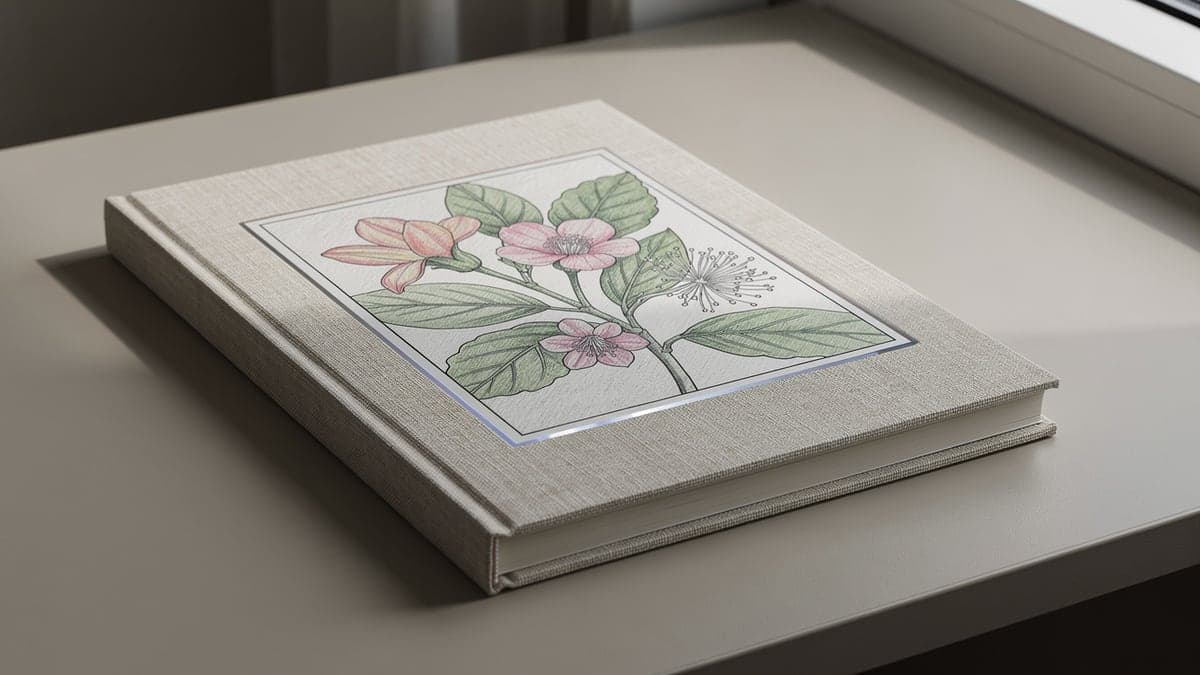
Journal cover template layouts
Choose the template by how the notebook will be used. A school journal needs sturdy edges and a label; an art journal can use a larger finished panel; a pocket notebook usually works best with scraps.
| Layout | Best for | Steps |
|---|---|---|
| Front-panel cover | Composition notebooks, school journals, art journals, and pages with one strong focal section | Trim the finished coloring page slightly smaller than the notebook cover and mount it with a clean border. |
| Wraparound cover | Thin notebooks, stapled journals, homemade booklets, and full-page designs | Measure front, spine, and back together, add a small fold allowance, then wrap and press flat. |
| Half-cover band | Small scraps, busy coloring pages, planner inserts, and quick classroom notebooks | Cut a wide band across the front cover and keep the rest of the notebook plain. |
| Corner cover pieces | Tiny scraps, florals, mandala edges, and journals that still need a title label | Place one or two finished-page pieces in the corners and leave the center open for writing. |
| Pocket cover | Reading journals, travel journals, sticker sheets, and small note cards | Back a colored panel with cardstock and attach three sides so the top stays open. |
| Label window cover | Classroom journals, homeschool notebooks, subject labels, and back-to-school sets | Mount the coloring page as the background, then add a plain label panel for the name or subject. |
Notebook size notes
| Notebook | Common cover size | Template note |
|---|---|---|
| Composition notebook | About 7.5 x 9.75 inches | Use a front-panel cover or half-cover band unless you have a large finished page. |
| Letter-size binder insert | 8.5 x 11 inches | Use one full finished page as a cover sheet, then slide it into a clear pocket. |
| A5 journal | About 5.8 x 8.3 inches | Trim a finished page panel and leave a small border so the cover does not lift at the edge. |
| Pocket notebook | About 3.5 x 5.5 inches | Use scraps, corner pieces, or a wraparound strip from one finished page. |
| Homemade booklet | Measure the folded booklet | Wrap one lightweight finished page around the folded pages and crease gently. |
Cover-making checklist
Measure first
- Measure the real notebook cover instead of relying on the product name
- Decide whether the cover should be a front panel, wraparound, band, or corner design
- Leave a small border so the finished page does not peel at the cover edge
- Keep bulky layers away from spiral binding, staples, and the spine
- Make a scrap-paper template before cutting a favorite finished coloring page
Prepare the page
- Photograph sentimental finished pages before trimming
- Let marker, gel pen, or watercolor pages dry completely
- Back thin printer paper with cardstock when the cover will be handled often
- Use a clear ruler to center the best part of the design
- Save offcuts for tabs, bookmarks, gift tags, or journal corners
Attach cleanly
- Dry-fit the piece before adding adhesive
- Use tape runner or glue dots when the notebook cover should stay flat
- Use glue stick for classroom projects and light paper
- Press the cover under clean paper while it dries
- Round corners after the page is attached if the cover catches at the edges
Group or school use
- Pre-cut cover panels for younger kids
- Add a plain label area for names, subjects, or dates
- Use half-cover bands when time or finished pages are limited
- Keep one recycle tray for scraps that are too small to use
- Let covers dry before stacking journals in backpacks or bins
Rights-safe cover note
Finished coloring pages are safest for personal journals, school notebooks, family keepsakes, and private planner covers. Do not sell a covered notebook, scan the full artwork, or repost the coloring page unless the page terms clearly allow that use.
Review the rights checklistHelpful journal cover supplies
Start with the notebook, the finished page, a scrap-paper template, and light adhesive. Add cardstock backing, a trimmer, or a corner rounder when the cover will be handled often or made in a batch.
| Supply | Best for | What to know | Compare |
|---|---|---|---|
| Blank journal or notebook | Personal journals, art notebooks, reading logs, and classroom cover projects | Choose the notebook before cutting the coloring page so the template fits the cover. | Compare on Amazon |
| Composition notebooks | Back-to-school covers, classroom journals, homeschool notebooks, and subject labels | They are sturdy, inexpensive, and easy to decorate with front-panel covers. | Compare on Amazon |
| Cardstock | Backing thin coloring pages, pocket covers, label panels, and handmade booklet covers | Cardstock helps printer-paper pages stay flatter when the notebook is used often. | Compare on Amazon |
| Tape runner or glue dots | Flat cover panels, wraparound edges, and pages that should not wrinkle | Dry adhesive is the easiest choice for a clean notebook cover. | Compare on Amazon |
| Glue sticks | Kids journals, classroom notebook covers, and low-mess group projects | Use a thin even layer and press the cover while it dries. | Compare on Amazon |
| Paper trimmer | Straight cover edges, repeated classroom cuts, and clean front panels | A trimmer is faster than scissors when making several covers. | Compare on Amazon |
| Corner rounder | Notebook covers, pocket inserts, tabs, and handled corners | Rounded corners reduce snags and make handmade covers feel more finished. | Compare on Amazon |
| Clear ruler and bone folder | Centering art, measuring borders, and creasing wraparound covers | A clear ruler helps line up the best part of the page; a bone folder keeps folds crisp. | Compare on Amazon |
Useful contexts
Journaling blogs, planner setup posts, art journal tutorials, homeschool notebook pages, and back-to-school craft guides can link to this as a practical template for reusing finished coloring pages as covers.
Natural anchors include coloring page journal cover template, finished coloring page notebook cover, handmade journal cover from coloring pages, and coloring page cover for school notebooks.
FAQ
How do I make a journal cover from a coloring page?
Measure the notebook cover, make a scrap-paper template, trim the finished coloring page slightly smaller than the cover, dry-fit it, then attach it with light adhesive and press it flat while it dries.
What journal cover template is easiest?
A front-panel cover is easiest. Trim one finished coloring page section smaller than the notebook cover and leave a clean border around it.
Can I wrap a notebook with a finished coloring page?
Yes, if the notebook is thin enough and the page is not too stiff. Measure front, spine, and back together, then crease the wrap gently before gluing.
What glue works best for coloring page journal covers?
Tape runners or glue dots keep covers flatter than wet glue. Glue sticks work well for kids and classroom projects when used lightly.
Should I back a coloring page with cardstock?
Use cardstock backing when the finished page is thin, marker-heavy, or likely to be handled often. Skip backing for light wraparound covers that need to fold.
Can I sell journals covered with coloring pages?
Do not assume selling is allowed. Check the coloring book or printable license first, because many coloring pages are personal-use only.