
Scrap reuse guide
What to Do With Coloring Page Scraps
Turn coloring page scraps into bookmarks, cards, gift tags, collage pieces, journal corners, classroom mosaics, and useful swatch records. Keep scraps that have a clear purpose, and recycle the pieces that only make the craft drawer harder to use.
Coloring Notebook
Scrap Sorting Sheet
Keep only useful scraps: long strips, focal pieces, color blocks, and test swatches. Recycle the pieces that do not point to a clear next project.
Long strips
Bookmarks, journal borders, card edges, page tabs, and collage framesKeep strips with clean color, borders, or repeated patterns.
Small focal pieces
Gift tags, card corners, tiny framed pieces, and envelope sealsKeep flowers, animals, mandala centers, seasonal icons, and readable details.
Color blocks
Collage backgrounds, classroom mosaics, color sorting, and simple shape cuttingKeep scraps that have one strong color family or a useful gradient.
Test swatches
Supply notebooks, paper comparisons, marker tests, and palette recordsKeep swatches that teach you something about a supply or paper.
Recycle
Clearing duplicate, torn, muddy, or unusable scrapsLet go of scraps that make the next project harder to start.
Direct answer
Use coloring page scraps for bookmarks, gift tags, card corners, journal borders, collage pieces, classroom mosaics, and supply swatches. Store only useful scraps in a small labeled bin, and recycle pieces that are torn, muddy, duplicated, or too tiny to use safely.
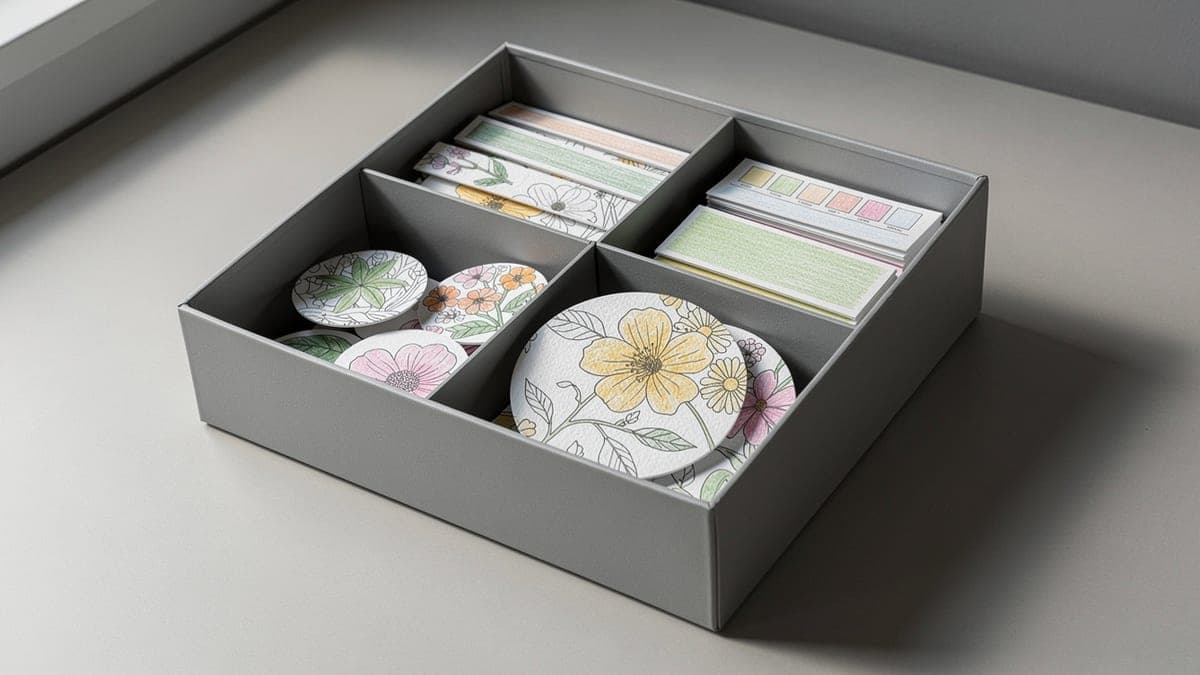
Coloring page scrap ideas
Match the scrap to the project. Long strips are good for bookmarks and borders; small focal pieces are better for cards and tags; color blocks work well for collage and mosaics.
| Idea | Best for | Steps |
|---|---|---|
| Bookmark accents | Long strips, borders, mandala edges, floral sections, and sturdy colored scraps | Trim the scrap into a strip, back with cardstock, and add it to a bookmark base. |
| Gift tag pieces | Small bright scraps, seasonal details, flowers, animals, and repeated patterns | Mount one scrap on cardstock, punch a hole, and write the message on the back. |
| Card corners | Tiny scraps, partial petals, small patterns, and leftover card-making pieces | Place scraps in one corner of a card and keep the rest of the card simple. |
| Journal borders | Thin strips, test swatches, color palettes, and scraps from trimmed pages | Glue strips along page edges, tabs, divider pages, or planner corners. |
| Collage bin | Mixed scraps from kids pages, adult coloring pages, and classroom projects | Sort scraps by color, shape, or size so they are ready for the next collage. |
| Color swatch archive | Practice marks, pencil gradients, marker tests, and paper experiments | Save useful swatches in a small envelope or tape them into a supply notebook. |
| Confetti shapes | Tiny non-sentimental scraps, party crafts, classroom tables, and envelopes | Punch circles, stars, hearts, or leaves and use them as flat paper accents. |
| Recycle pile | Duplicate scraps, muddy marker tests, torn paper, and pieces with no useful color | Recycle plain paper scraps when they are not sentimental and not useful for crafts. |
Scrap bin checklist
Before saving scraps
- Scan or photograph sentimental finished pages before cutting
- Separate personal-use printable scraps from pages that can be shared or sold
- Let marker, gel pen, or watercolor scraps dry before storing
- Recycle scraps that are torn, muddy, or too small to use safely
- Keep only the scraps that suggest an obvious future use
Set up a scrap bin
- Use one small envelope, folder, or divided box
- Label sections by strips, focal pieces, color blocks, and swatches
- Keep classroom scraps separate from personal keepsakes
- Sort scraps before they become a loose paper pile
- Review the bin monthly and recycle what no longer feels useful
Quick projects
- Turn strips into bookmarks
- Mount focal pieces onto gift tags
- Use tiny scraps for card corners
- Glue color blocks into a collage
- Tape useful swatches into a supply notebook
Classroom use
- Pre-sort scraps into color bins
- Use glue sticks instead of wet glue for faster cleanup
- Give younger kids larger scraps and simple backing sheets
- Set a recycle tray beside the scrap bin
- Send finished projects home flat in folders
Parent, classroom, and craft room versions
| Setting | Project | Note |
|---|---|---|
| Parent activity table | Scrap collage card | Set out cardstock, glue sticks, and sorted color scraps for a quick low-mess project. |
| Classroom early finisher bin | Bookmark and tag scraps | Keep long strips and small focal pieces ready for simple independent crafts. |
| Craft room organization | Labeled scrap folder | Sort scraps by size and use so the folder helps future projects instead of hiding clutter. |
| Library craft program | Group mosaic | Ask participants to add scraps by color family to one shared backing sheet. |
| Adult coloring table | Swatch and palette notebook | Save useful test scraps to remember pencils, markers, paper, and color combinations. |
Rights-safe scrap note
Scraps from finished coloring pages are safest for personal crafts, classroom projects, family keepsakes, and group activities. Do not sell, scan, repost, or bundle someone else's coloring page unless the page terms clearly allow it.
Review the rights checklistHelpful scrap storage and craft supplies
Start with one envelope, a recycle tray, cardstock, and glue sticks. Add divided storage, shape punches, or precision scissors only if scraps are becoming a real part of your craft routine.
| Supply | Best for | What to know | Compare |
|---|---|---|---|
| Divided craft organizer | Sorting scraps by strips, focal pieces, color blocks, and swatches | A small organizer is enough; oversized storage encourages saving too much. | Compare on Amazon |
| Large envelopes | Simple scrap storage, classroom take-home sets, and project-ready packs | Envelopes are cheaper and flatter than boxes for light paper scraps. | Compare on Amazon |
| Cardstock | Backing bookmarks, cards, gift tags, and collage projects | Use cardstock as the base when scraps are thin printer paper. | Compare on Amazon |
| Glue sticks | Kids scrap projects, classroom bins, and low-mess collage work | Washable glue sticks are the easiest group-project adhesive. | Compare on Amazon |
| Shape punches | Turning tiny scraps into circles, hearts, stars, leaves, and accents | Use punches only on scraps that are not sentimental and not too thick. | Compare on Amazon |
| Precision scissors | Cutting small flowers, borders, mandala pieces, and card accents | Small scissors help when scraps have useful details near the edge. | Compare on Amazon |
Useful contexts
Zero-waste craft blogs, classroom scrap-bin pages, parent activity posts, craft room organization guides, library craft recaps, and homeschool project lists can link to this as a practical coloring page scrap guide.
Natural anchors include what to do with coloring page scraps, coloring page scrap ideas, finished coloring page scraps, and classroom coloring scrap bin.
FAQ
What can I do with coloring page scraps?
Coloring page scraps can become bookmark accents, gift tags, card corners, journal borders, collage pieces, classroom mosaics, swatch records, or recycled paper.
How should I store coloring page scraps?
Store useful scraps in a small envelope, folder, or divided organizer. Sort them by strips, focal pieces, color blocks, and test swatches so they are easy to use later.
Should I keep every coloring page scrap?
No. Keep scraps with clear color, useful shapes, sentimental value, or a known project. Recycle duplicate, torn, muddy, or confusing scraps.
Can kids use coloring page scraps for crafts?
Yes. Give kids larger scraps, glue sticks, cardstock backing, and simple projects such as collage cards, bookmarks, or classroom mosaics.
What glue is best for coloring page scraps?
Glue sticks are best for kids and classroom scraps. Dry adhesive works better for flat cards and tags. Use wet glue lightly so thin scraps do not wrinkle.
Can I sell crafts made from coloring page scraps?
Do not assume selling is allowed. Check the coloring book or printable license first, because many pages are personal-use only.