
Journal reuse guide
Coloring Page Journal Ideas
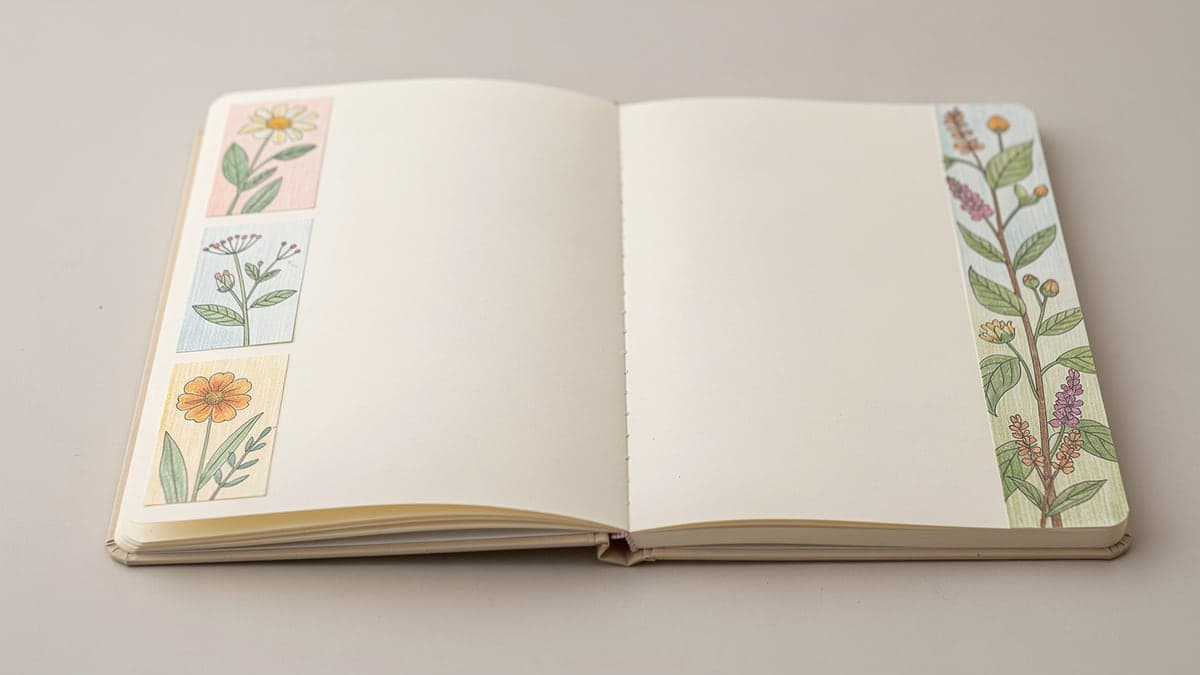
Finished coloring pages and scraps can become journal covers, page borders, planner tabs, pockets, collage corners, palette notes, and reading cards. Start with the job each piece can do, then choose glue and backing paper that keep the notebook easy to write in.
Coloring Notebook
Journal Reuse Planner
Match each finished coloring page piece to a journal job: cover, border, tab, pocket, palette page, or collage corner.
Journal cover panel
Finished pages with one strong focal section, florals, mandalas, animals, or bold marker colorTrim the page slightly smaller than the cover, back thin paper with cardstock, and attach it flat.
Page border strips
Long scraps, page edges, test strips, repeated patterns, and trimmed printable bordersCut narrow strips and glue them along journal page edges, monthly pages, or section starts.
Planner tabs
Small sturdy scraps, color blocks, botanical pieces, and repeated page detailsFold a scrap over the page edge, glue both sides, and label the tab after it dries.
Collage corners
Tiny scraps, partial petals, mandala pieces, and leftover card or tag cutsLayer two or three pieces in one corner and leave the rest of the journal page open.
Pocket insert
Cardstock-backed scraps, finished page panels, reading notes, receipts, and keepsakesAttach three sides of a backed panel so the top stays open as a small journal pocket.
Palette and swatch page
Color tests, pencil gradients, marker swatches, and paper experimentsTape useful swatches into a notebook and write the supply, paper, and color notes beside them.
Direct answer
The easiest coloring page journal ideas are cover panels, page borders, planner tabs, collage corners, pockets, palette pages, and small reading or gratitude cards. Use cardstock backing for thin pages, dry adhesive for flat planner pages, and personal-use scraps for personal notebooks unless the license says otherwise.
Coloring page journal ideas
Think in shapes first. Long strips become borders and tabs, larger panels become covers or pockets, and small focal pieces work best as corners, cards, and page markers.
| Idea | Best for | Steps |
|---|---|---|
| Journal cover panel | Finished pages with one strong focal section, florals, mandalas, animals, or bold marker color | Trim the page slightly smaller than the cover, back thin paper with cardstock, and attach it flat. |
| Page border strips | Long scraps, page edges, test strips, repeated patterns, and trimmed printable borders | Cut narrow strips and glue them along journal page edges, monthly pages, or section starts. |
| Planner tabs | Small sturdy scraps, color blocks, botanical pieces, and repeated page details | Fold a scrap over the page edge, glue both sides, and label the tab after it dries. |
| Collage corners | Tiny scraps, partial petals, mandala pieces, and leftover card or tag cuts | Layer two or three pieces in one corner and leave the rest of the journal page open. |
| Pocket insert | Cardstock-backed scraps, finished page panels, reading notes, receipts, and keepsakes | Attach three sides of a backed panel so the top stays open as a small journal pocket. |
| Palette and swatch page | Color tests, pencil gradients, marker swatches, and paper experiments | Tape useful swatches into a notebook and write the supply, paper, and color notes beside them. |
| Reading or gratitude card | Small finished sections, favorite colors, book journals, and daily note pages | Mount one piece on a card, write a prompt on the back, and tuck it into the journal. |
| Mixed-media spread | Adult craft journals, art journals, spare scraps, handwriting, washi tape, and labels | Layer coloring scraps with plain paper and writing, then keep the page light enough to turn easily. |
Which journal format fits?
| Format | Best for | Note |
|---|---|---|
| Bullet journal | Tabs, weekly page borders, habit tracker accents, and small color-coded scraps | Keep scraps small so trackers and lists stay readable. |
| Art journal | Mixed-media spreads, large cover panels, layered scraps, and color experiments | Use stronger paper if the page will include wet glue or several layers. |
| Planner | Month dividers, bookmarks, tabs, dashboard cards, and seasonal inserts | Trim pieces cleanly so the planner still closes flat. |
| Reading journal | Bookmarks, quote cards, pocket inserts, and colored page markers | Use finished page scraps as soft dividers between books, months, or themes. |
| Classroom reflection journal | Student covers, group activity pages, name labels, and low-mess collage corners | Pre-cut larger pieces and use glue sticks for easier cleanup. |
| Travel journal | Small pockets, page tabs, color memories, and lightweight envelope inserts | Use flat adhesive so the journal does not bulk up too quickly. |
Journal setup checklist
Choose useful pieces
- Photograph sentimental finished pages before cutting
- Set aside long strips for borders, tabs, and page markers
- Save small focal pieces for corners, pockets, and cards
- Keep test swatches only when they include useful supply notes
- Recycle scraps that are torn, muddy, or too small to use safely
Prepare the journal
- Choose the notebook before cutting final pieces
- Check whether the paper can handle glue without wrinkling
- Use cardstock backing when finished coloring pages are thin
- Keep bulky layers away from the spine
- Leave writing space clear before adding decorative scraps
Attach and finish
- Dry-fit covers, tabs, and borders before adding adhesive
- Use glue stick for light paper and tape runner for flatter pages
- Press finished pages under clean paper while they dry
- Round sharp corners on tabs or pocket inserts
- Let pages dry before closing the notebook
Group or classroom use
- Pre-cut strips and larger scraps for younger kids
- Keep one scrap tray and one recycle tray on the table
- Use simple cover panels instead of tiny collage pieces
- Label notebooks before glue and paper pieces come out
- Send loose scraps home in envelopes if the journal needs drying time
Rights-safe journal note
Finished coloring pages are safest in personal journals, school notebooks, family keepsakes, and private planner projects. Do not sell a journal, scan a full page, or repost the artwork unless the coloring book or printable terms clearly allow that use.
Review the rights checklistHelpful journal and paper-craft supplies
You can start with a blank notebook, cardstock, and a glue stick. Add a paper trimmer, dry adhesive, washi tape, or corner rounder only when you are making several tabs, pockets, or cover panels.
| Supply | Best for | What to know | Compare |
|---|---|---|---|
| Blank journal or notebook | Cover panels, tabs, page borders, reading journals, and art journals | Choose paper that matches the project: lighter for writing, heavier for glue and collage. | Compare on Amazon |
| Cardstock | Backing thin coloring pages, pockets, tabs, dashboard cards, and cover panels | A simple cardstock backing keeps printer-paper scraps from curling or tearing. | Compare on Amazon |
| Glue sticks | Classroom journals, kids notebooks, light scraps, and low-mess paper borders | Glue sticks are easiest when several people are working at one table. | Compare on Amazon |
| Tape runner or glue dots | Planner tabs, pockets, card inserts, and pages that should stay flat | Dry adhesive reduces wrinkling on thin notebook pages. | Compare on Amazon |
| Washi tape | Reinforcing tabs, framing scraps, covering edges, and adding removable accents | Use washi tape as a light hinge or edge finish, not as the only support for heavy pieces. | Compare on Amazon |
| Corner rounder | Tabs, pockets, cards, cover panels, and pieces handled often | Rounded corners make handmade inserts feel smoother and help reduce snags. | Compare on Amazon |
| Paper trimmer | Straight borders, cover panels, planner dividers, and repeated classroom cuts | A trimmer is faster than scissors when several strips need to match. | Compare on Amazon |
| Clear ruler and craft knife | Adult craft sessions, exact windows, pockets, and straight cover-panel trimming | Use only on a cutting mat and skip this for younger kids. | Compare on Amazon |
Useful contexts
Journaling blogs, planner setup posts, mixed-media craft tutorials, homeschool notebook pages, and craft room scrap-use guides can link to this as a practical way to reuse finished coloring pages in notebooks.
Natural anchors include coloring page journal ideas, finished coloring page journal, coloring page scraps journal, handmade journal page borders, and coloring page planner tabs.
FAQ
What are good coloring page journal ideas?
Finished coloring pages and scraps can become journal covers, page borders, planner tabs, collage corners, pocket inserts, palette pages, bookmarks, and reading or gratitude cards.
Can I put finished coloring pages in a journal?
Yes. Trim finished coloring pages into cover panels, inserts, borders, or pockets. Back thin paper with cardstock and keep bulky layers away from the journal spine.
What glue works best for coloring page journals?
Glue sticks work well for light paper and group projects. Tape runners or glue dots are better when journal pages need to stay flat. Use wet glue sparingly.
How do I use coloring page scraps in a planner?
Use long scraps as page borders, small pieces as tabs, cardstock-backed panels as dividers, and tiny focal pieces as collage corners or dashboard cards.
Can kids make journals from coloring pages?
Yes. Use larger scraps, blank notebooks, glue sticks, cardstock covers, and simple tabs or borders. Pre-cutting pieces keeps the activity easier and safer.
Can I sell journals made with coloring pages?
Do not assume selling is allowed. Check the coloring book or printable license first, because many coloring pages are personal-use only.