
Classroom portfolio tabs
Classroom Coloring Page Portfolio Divider Tabs
Divider tabs help teachers keep coloring portfolios sorted by month, student, display history, selected examples, source notes, parent conferences, take-home review, and storage reset timing.
Portfolio Divider Tabs
Coloring Portfolio Sections
Use divider tabs to separate monthly pages, selected examples, source notes, display history, conferences, and take-home review.
Month tab
Monthly portfolio sectionsSeptember pages / review before October 4
Student tab
Individual sections inside a shared binderStudent: _____ / Room: _____
Display history
Pages coming down from classroom displaysDisplayed: _____ / Returned: _____
Selected example
Pages saved for review or conferencesSelected example: effort / pattern / color practice
Direct answer
Classroom coloring page portfolio divider tabs should separate monthly pages, student sections, display history, selected examples, source notes, conference pages, take-home review, and storage reset timing.
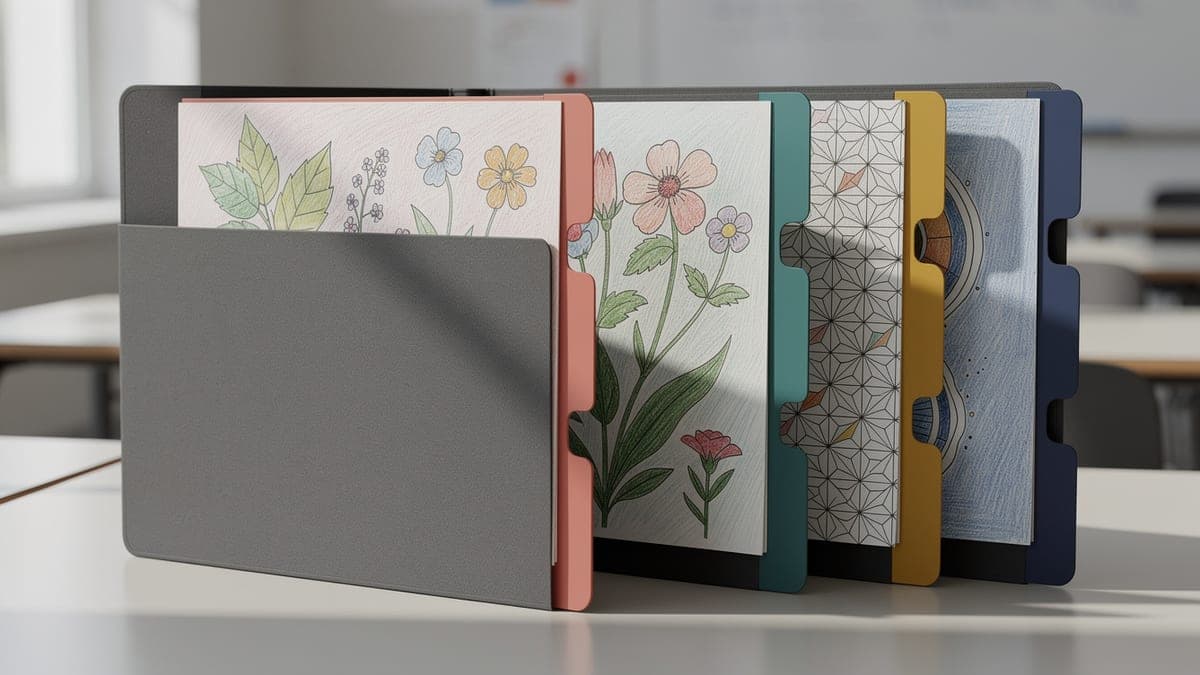
Portfolio divider tab types
Choose tabs by the decision teachers need to make later. A useful divider tells whether the page is current work, a selected example, a display return, a source note item, or ready to go home.
| Tab | Best for | What to write |
|---|---|---|
| Monthly divider tab | Student portfolios, class binders, homeschool co-op folders, and school-year review | Use month or term tabs so old pages do not mix with current coloring work. |
| Student name tab | Whole-class binders, table groups, shared bins, and absent student pages | Sort by student name when staff or students add pages to one shared system. |
| Display history tab | Pages that were on bulletin boards, hallway displays, open house tables, or showcases | Keep display dates and return notes together before pages move home or into selected examples. |
| Selected examples tab | Progress samples, color practice, effort examples, and parent conference packets | Separate examples that show something useful from regular practice pages. |
| Source notes tab | Printable pages, donated worksheets, library packets, and classroom-created sheets | Keep source notes staff-facing and easy to find before pages are reused or shared. |
| Parent conference tab | Pages used for family meetings, progress examples, and take-home conversations | Use conference tabs for a small set of examples, not every finished page. |
| Take-home review tab | Pages ready to send home, displayed pages waiting for return, and end-of-term folders | Mark when pages leave the portfolio so folders do not grow forever. |
| Storage reset tab | End-of-month review, end-of-term cleanup, and binder or box reset routines | Add a reset date so portfolios stay useful after each classroom cycle. |
Wording examples
Month tab
Monthly portfolio sections
September pages / review before October 4
Student tab
Individual sections inside a shared binder
Student: _____ / Room: _____
Display history
Pages coming down from classroom displays
Displayed: _____ / Returned: _____
Selected example
Pages saved for review or conferences
Selected example: effort / pattern / color practice
Source notes
Staff-facing records for reusable pages
Source notes and printable permissions here
Take-home review
Pages that should not stay in storage
Send home after review: _____
Binder and folder choices
Individual binder
Year-long student portfolios, selected examples, and conference review
Use monthly tabs and a small selected-example section so binders stay manageable.
Pocket folder portfolio
Younger students, weekly take-home timing, and simple classroom routines
Use adhesive tabs or folder labels instead of bulky dividers.
Whole-class binder
Table groups, staff examples, shared source notes, and display history
Use student name tabs or table tabs so pages do not disappear into one stack.
Hanging file box
Large classes, absent student pages, monthly review, and end-of-term pickup
Use file tabs when pages are added often and moved home in batches.
Conference packet
Small selected examples and family conversations
Use tabs for the few pages that need context, not every practice sheet.
Homeschool co-op folder
Family sections, source notes, group display history, and take-home review
Separate family tabs from staff source notes so folders stay easy to share.
Reset timing
| Timing | Review | Action |
|---|---|---|
| Weekly | Current pages, no-name pages, and take-home batches | Send regular pages home and move selected examples into the right tab. |
| Monthly | Month tab, source notes, display history, and duplicate practice pages | Keep one small example set and clear pages that no longer need to stay. |
| After display | Display history tabs and classroom return slips | Move pages to selected examples, take-home review, or recycle decisions. |
| Before conferences | Selected examples, student tabs, and source notes | Pull only the pages that help the conversation stay clear. |
| End of term | All tabs, storage boxes, and take-home folders | Send most pages home, keep a small record set, and reset tabs for the next term. |
Divider tab checklist
Before adding tabs
- Choose whether the portfolio is sorted by month, student, display history, or selected examples
- Decide which pages go home quickly and which pages stay for review
- Keep source notes staff-facing and separate from student take-home pages
- Use a small number of tabs so students and helpers can maintain the system
- Write the reset timing before the first batch of pages arrives
During the school year
- Move pages out of the display tab after they come down from the wall
- Put duplicate practice pages in take-home review instead of selected examples
- Add dates to monthly tabs before pages are mixed together
- Keep no-name pages in one visible folder before filing
- Check source notes before reprinting or sharing classroom packets
Before parent conferences
- Use selected examples that show effort, progress, color choices, or a specific classroom theme
- Keep the conference section small enough to explain quickly
- Add display history only when it helps the family understand why the page was saved
- Remove pages that are only duplicates or unfinished practice
- Mark which pages go home after the conference
Before storage reset
- Review each tab before adding another month of pages
- Send home pages that no longer need classroom storage
- Recycle duplicate extras after source and display decisions are complete
- Keep one source note section for staff records
- Refresh tab wording before the next class, term, or program cycle
Classroom pairings
| Setting | Tab | Setup |
|---|---|---|
| Monthly student binder | Monthly divider tab | Use one tab per month and a take-home review date at the front of the binder. |
| Class display rotation | Display history tab | Record display dates before pages move to selected examples or home folders. |
| Parent conference packet | Selected examples tab | Pull a small set of pages that explain progress, effort, or theme work. |
| Whole-class file box | Student name tab | Sort by student name or table group so pages can be found quickly. |
| Printable packet records | Source notes tab | Keep staff source notes separate from pages that go home with students. |
| End-of-term cleanup | Storage reset tab | Review each tab, send most pages home, and reset dividers before the next term. |
Keep the selected section small
Divider tabs work best when each tab has a clear job. Save only selected examples that help with review, display history, or family conversations, then send regular practice pages home on schedule.
Add portfolio labelsHelpful tab supplies
Start with clear sections and a reset schedule. Add binders, dividers, tabs, or file folders only when they make pages easier to review or send home.
| Supply | Best for | What to know | Compare |
|---|---|---|---|
| Binder dividers | Monthly sections, source notes, selected examples, and conference sections | Choose write-on or printable tabs when section names change often. | Compare on Amazon |
| Adhesive tabs | Pocket folders, temporary sections, take-home review, and thin portfolios | Adhesive tabs work when a full binder divider is too bulky. | Compare on Amazon |
| Sheet protectors | Selected examples, source notes, display history, and conference pages | Use sleeves for pages that need repeated handling, not every practice page. | Compare on Amazon |
| Pocket folders | Simple portfolios, take-home batches, younger students, and weekly review | Folders are easier than binders when pages go home frequently. | Compare on Amazon |
| Hanging file folders | Whole-class sorting, student tabs, monthly tabs, and absent student pages | File folders work well when students add pages often. | Compare on Amazon |
| Removable labels | Student names, date ranges, display history, and reset timing | Removable labels help dividers and folders change between terms. | Compare on Amazon |
| Storage bins | End-of-term portfolios, file boxes, table group folders, and overflow pages | Use one reset date on every bin so storage does not grow silently. | Compare on Amazon |
| Paper trimmer | Cutting divider labels, tab inserts, source note slips, and take-home notes | A trimmer keeps repeated tabs easier to scan. | Compare on Amazon |
Useful contexts
Teacher organization blogs, portfolio binder systems, homeschool co-op resources, daycare activity records, and parent keepsake posts can use divider tabs as a practical classroom organization starter.
Helpful wording includes classroom coloring page portfolio divider tabs, monthly portfolio tabs, selected example tabs, display history tabs, source note tabs, and take-home review tabs.
FAQ
What tabs should a classroom coloring page portfolio include?
Useful portfolio tabs include monthly sections, student names, display history, selected examples, source notes, parent conference pages, take-home review, and storage reset timing.
Should classroom coloring portfolios be sorted by month or student?
Use monthly tabs for individual portfolios and student tabs for whole-class binders or file boxes. If pages move home often, monthly tabs plus take-home review are usually easier.
Where should source notes go in a classroom coloring portfolio?
Keep source notes in a staff-facing tab, sleeve, or folder. The student-facing portfolio can stay simple while still keeping reusable page details easy for teachers to find.
How many coloring pages should stay in a portfolio?
Keep selected examples that show effort, progress, a classroom theme, display history, or a useful source note. Send most regular practice pages home on a predictable schedule.
How often should portfolio divider tabs be reset?
Review tabs weekly for take-home pages, monthly for duplicate practice pages, after displays for return routing, before conferences for selected examples, and at the end of each term for storage reset.
Are binder dividers or folders better for coloring page portfolios?
Binders and dividers work best for selected examples and conference review. Pocket folders or hanging files are easier when pages are added often or sent home in batches.