
Best Washable Markers for Toddlers
Choose washable markers for toddlers by age label, supervision needs, chunky grip, broad tip, simple pages, cleanup, paper, and storage.
 Written byM.R. SilvermanUpdated July 3, 2026 6 min read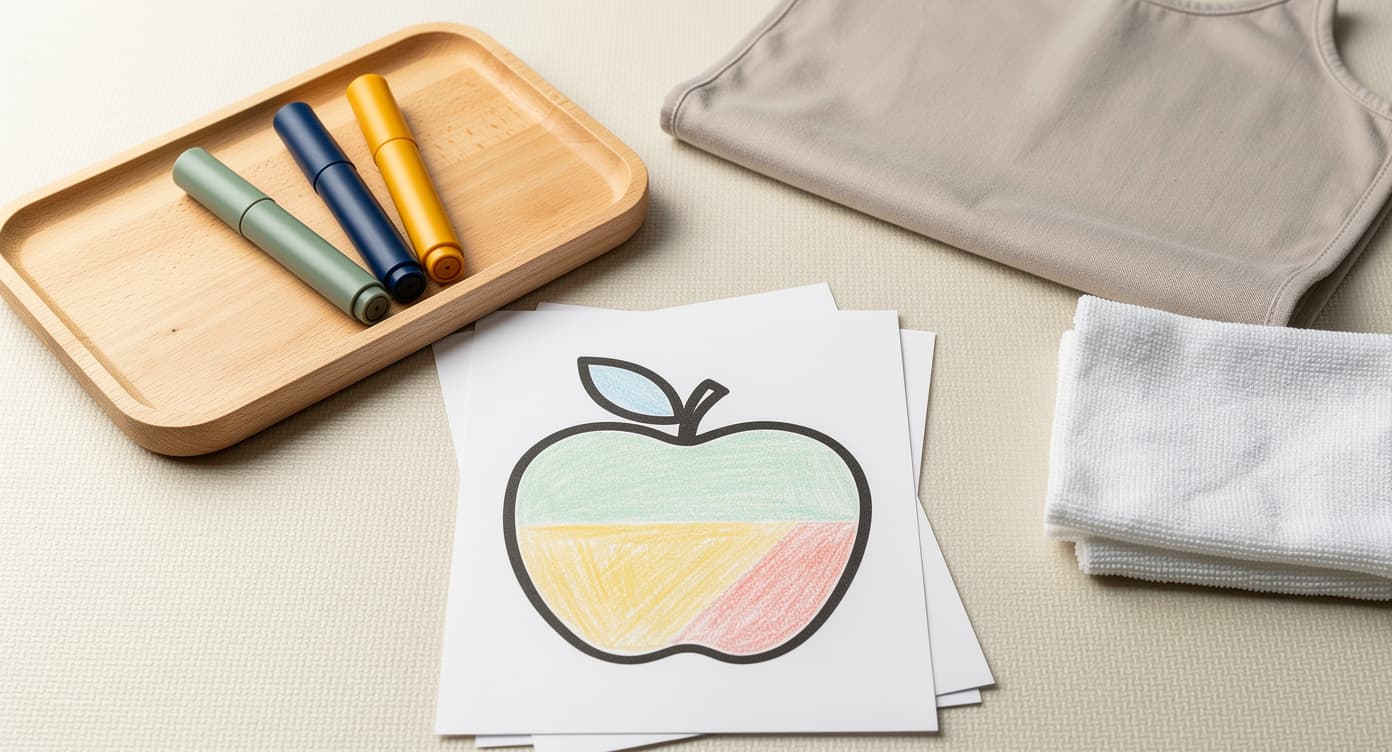
Direct answer
The best washable markers for toddlers are clearly age-labeled for the child using them, easy for an adult to supervise, chunky enough to grip, broad enough for large coloring spaces, and washable from common surfaces when used as directed. Do not rely on “washable” as a safety guarantee or a stain-proof promise. Follow the package age guidance, supervise closely, and start with one simple page and a few colors.
Quick takeaways
- Age guidance and supervision matter more than color count or novelty features.
- Chunky barrels, broad tips, fewer colors, and large simple pages work better for toddler coloring.
- Washable markers still need table protection, backing paper, and quick cleanup habits.
Visual checks
Options to compare
Use these starting points to match the page, paper, and coloring style before you buy anything new.
| Option | Best for | What to know | Compare |
|---|---|---|---|
Toddler washable marker set Best supervised first marker | Large shapes, short coloring sessions, and first marker activities | Choose only sets with age guidance that fits the child and read the package before use. | Compare on Amazon |
Chunky broad-tip markers Best grip and fill option | Toddlers who color large animals, shapes, letters, and simple pages | Broad tips are easier for large spaces and less frustrating than fine tips. | Compare on Amazon |
Washable dot markers Best dab-and-fill alternative | Large dot pages, simple shapes, and toddlers who press rather than draw lines | Check the age label and cap design; dot markers still need supervision and table protection. | Compare on Amazon |
Mess-free marker and paper set Best low-mess travel option | Car trips, restaurants, waiting rooms, and short activities away from home | These sets usually need special paper, so check refills and age guidance before buying. | Compare on Amazon |
Toddler coloring book Best matching page style | One large subject per page, bold outlines, and quick wins | Look for simple pages with large spaces instead of detailed scenes. | Compare on Amazon |
Washable art smock Best cleanup helper | Messier coloring sessions, daycare tables, and toddlers who touch sleeves often | A smock reduces cleanup stress but does not replace supervision. | Compare on Amazon |
Heavy printer paper or art pad Best sturdier paper | Markers, heavy pressure, and pages parents want to save | Use a backing sheet even with heavier paper because toddlers often color hard. | Compare on Amazon |
Small marker caddy Best storage routine | Keeping a few colors visible, counted, and easy to cap after the activity | Small storage makes it easier to open only a few markers at once. | Compare on Amazon |
Sources and testing notes
This guide compares intended use, paper fit, and practical tradeoffs. It is selection guidance rather than a hands-on product test unless a section says otherwise. Check the merchant page for current materials, set contents, availability, and safety information before buying.
Start with the age label
For toddler markers, the first filter is the product label. Use markers only for the ages listed by the maker, and follow the package directions for supervision, cleanup, and storage.
Toddlers still explore with their hands and mouths, so a washable art label does not make markers safe for unsupervised use. Keep caps, barrels, and loose supplies within adult control.
Nontoxic or art-material safety labels still mean “use as directed.” Markers are not for chewing, eating, face painting, or unsupervised play.
If a marker set is labeled for older children, choose crayons, large simple pages, or an age-appropriate art supply instead of trying to make the marker fit the toddler.
Under 3 versus 3 plus
Toddlers are not one uniform age group. Many marker sets are labeled for ages 3 and up, which may fit some preschoolers but not a one- or two-year-old.
For children under 3, pay extra attention to caps, small parts, mouthing behavior, and whether the child can use the supply as directed. If the child still mouths tools, wait or choose a more appropriate supply.
For older toddlers and preschoolers, keep the first marker sessions short and active. Sit nearby, open only a few colors, and close caps before attention drifts.
What to look for in toddler markers
Chunky barrels are usually easier for small hands to hold. Broad tips fill large spaces faster and make early coloring feel less frustrating.
A small color count is better than a huge set. Three to eight colors are easier to supervise, easier to cap, and enough for simple toddler pages.
Skip fine tips, tiny caps, strong scents, complex dual-tip sets, and specialty ink for first toddler coloring. Simple washable supplies make setup and cleanup easier.
Best page styles for toddlers
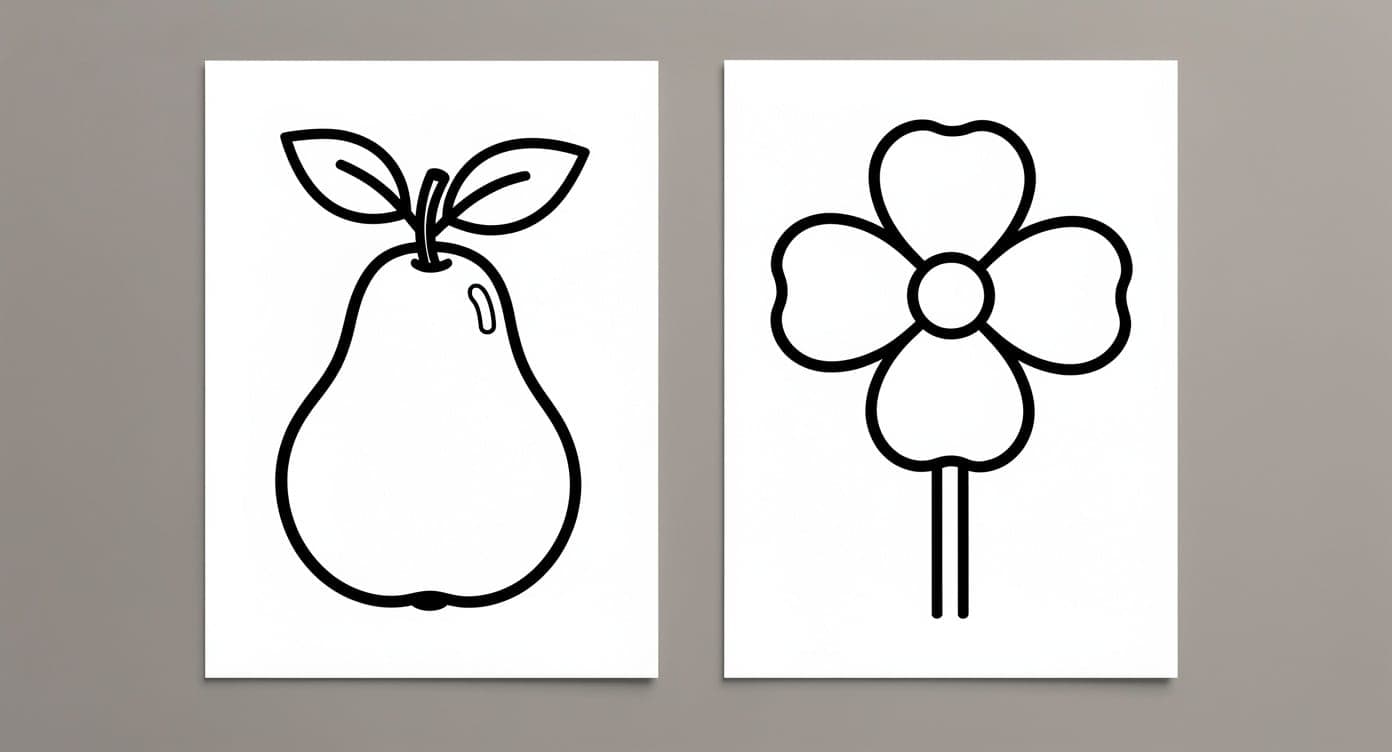
Use pages with one large subject: an animal, car, apple, star, flower, simple letter, or basic shape. Large spaces fit broad marker tips and short attention spans.
Avoid tiny patterns, detailed characters, and crowded scenes. Those pages are better for preschoolers or older kids with more hand control.
If the goal is a calm activity, print or open only one or two pages. Too many choices can make the session harder to start and harder to clean up.
Washable is not stain-proof
Washable markers are designed to clean more easily than many regular markers, but they are not a promise that every surface, fabric, or wall will clean perfectly.
Protect the table, use a backing sheet, roll up sleeves, and keep wipes or a damp cloth nearby. Treat clothing marks before heat-drying and follow the marker maker and garment care instructions.
Test a new marker set on scrap paper first. Some ink looks wetter, shadows through paper, or transfers when a toddler colors heavily in one spot.
Simple supervised setup
Put one page on the table with scrap paper underneath. Open two or three colors, keep the rest closed, and recap each marker before opening more.
Keep the session short. Toddlers often do better with five to ten minutes of coloring than a long activity that ends with dried-out markers and scattered caps.
After coloring, count the markers, close caps firmly, wash hands, and put the set out of reach. The reset matters as much as the purchase.
Home, daycare, and travel notes
At home, a small age-appropriate washable set and a folder of simple pages is enough. Keep the activity near a surface that is easy to wipe.
For daycare or group use, buy enough basic colors so adults are not constantly mediating sharing. Store markers separately from crayons, pencils, scissors, and glue.
For travel, crayons or mess-free options may be easier than markers. If you use markers away from home, bring a clipboard, backing sheet, and a small resealable bag for the reset.
When crayons may be better
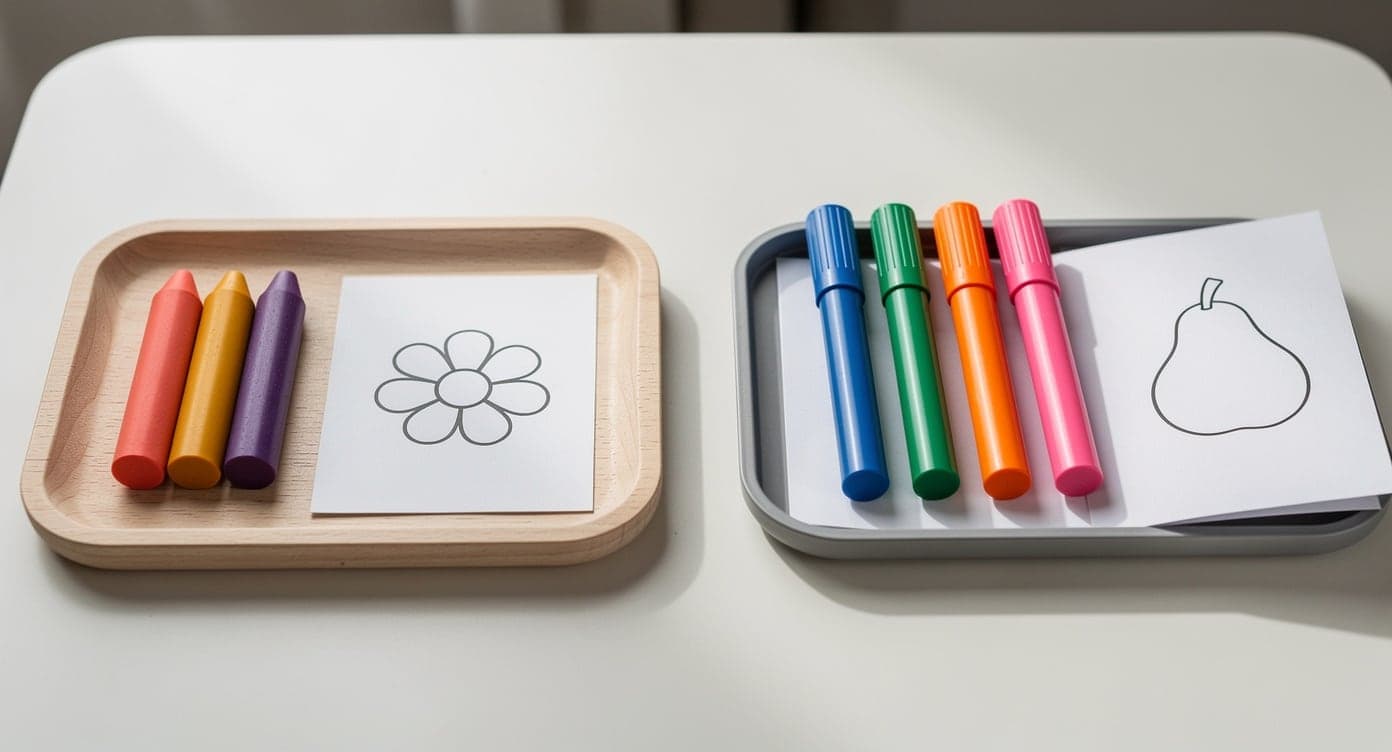
Markers are bright and fun, but crayons are often easier for very young toddlers because they are less wet, less likely to bleed through paper, and simpler to use in short bursts.
Choose markers when the child is ready for supervised cap handling and large pages. Choose crayons when cleanup, travel, or younger age guidance is the deciding factor.
There is no need to rush. The best toddler coloring supply is the one that fits the child, the room, and the adult who will supervise the activity.
Printable resource
Washable marker cleanup checklist
Use this parent and teacher checklist before washable marker coloring activities.
Kids coloring activity folder guide
Set up a reusable kids coloring folder for rainy days, travel, homeschool, classrooms, and library activity tables.
Classroom coloring supply checklist
Build a classroom, homeschool, daycare, or library coloring table kit with supplies that are easy to reset.
Toddler marker setup checklist
Use this quick setup checklist before toddler marker activities at home, daycare, preschool, or library tables.
Marker bleed-through test sheet
Use this printable swatch sheet before coloring a full page with markers.
Coloring paper weight cheat sheet
Compare paper types before printing adult pages, kids pages, or marker-heavy designs.
FAQ
What washable markers are best for toddlers?
Choose washable markers with age guidance that fits the child, chunky barrels, broad tips, a small color count, and clear package instructions for supervised use.
Are washable markers safe for toddlers?
Use only markers that match the package age guidance and supervise closely. Washable does not mean safe for unsupervised use or appropriate for every toddler age.
What age can toddlers use markers?
Marker age guidance varies by product. Follow the package label instead of assuming all washable markers are toddler-ready.
Are markers labeled 3+ okay for younger toddlers?
Not automatically. A 3+ label is not meant for younger toddlers. Follow the product age label and consider caps, small parts, mouthing behavior, and supervision needs.
Are washable markers nontoxic?
Many children’s art markers are labeled nontoxic or carry art-material safety labeling, but they still must be used as directed and are not for chewing, eating, or face painting.
Are dot markers good for toddlers?
Washable dot markers can be useful for large shapes and dab-style coloring when the age label fits and an adult supervises the activity.
Do washable markers come out of toddler clothes?
They are often easier to clean than regular markers, but they are not stain-proof. Treat marks before heat-drying and follow the product and garment care instructions.
Are markers or crayons better for toddlers?
Crayons are often easier for very young toddlers and travel. Washable markers are brighter but need closer supervision, backing paper, and cleanup routines.
What coloring pages work best with toddler markers?
Use simple pages with bold outlines and one large subject, such as animals, fruit, vehicles, letters, stars, flowers, and basic shapes.