
Printable budget planner
Coloring Page Printing Cost Checklist
Estimate the real cost of printable coloring pages before you print a whole pack. Paper, ink, test pages, and mistakes matter more than the download price alone.
Coloring Notebook
Coloring Page Printing Cost Checklist
Estimate paper, ink, test prints, storage, and whether a book is the better choice.
Page plan
- How many finished pages do you need?
- Will every page be full size?
- Are pages single-sided or double-sided?
- Will kids, adults, or a group use them?
- Do any pages need heavier paper?
Paper cost
- Standard printer paper for everyday pages
- Heavyweight paper for saved pages
- Cardstock only when the printer can handle it
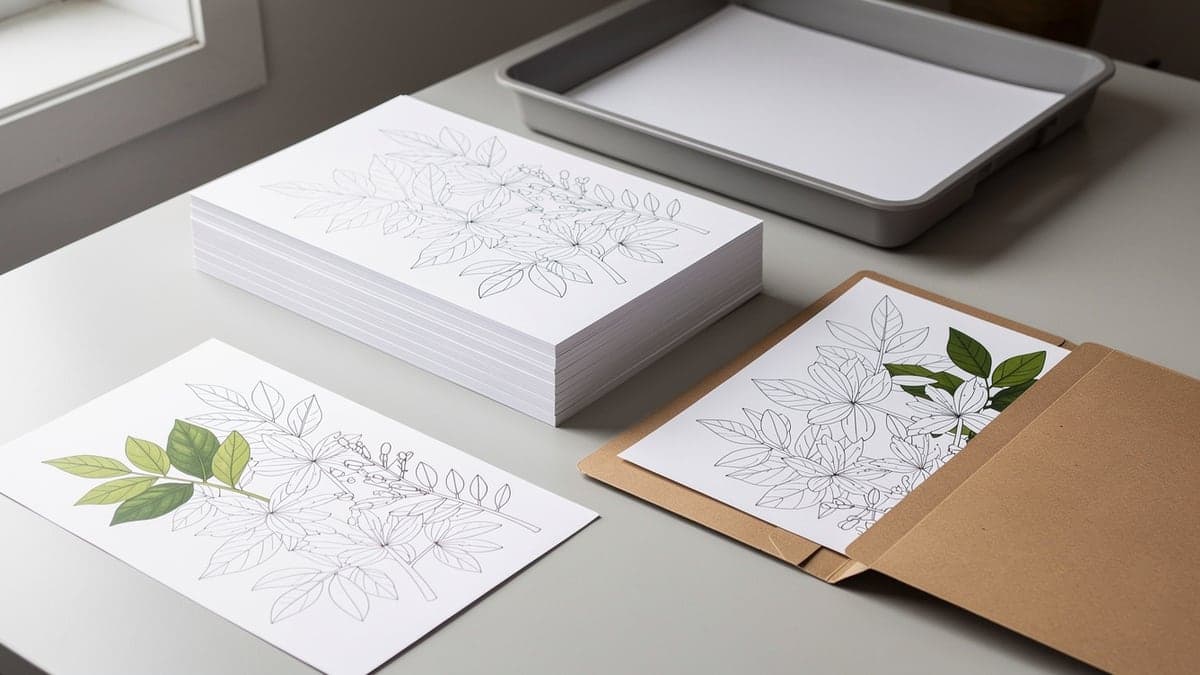
- Extra sheets for test prints and mistakes
- Folder or binder storage for reusable packs
Ink and toner
- Black line art usually costs less than full-color pages
- Preview pages before printing the whole pack
- Use grayscale only when color is not needed
- Check estimated cartridge yield before bulk printing
- Watch for dense borders, gray backgrounds, and heavy art
Decision point
- Print a small pack for variety and quick activities
- Use a coloring book when you need many pages at once
- Print premium paper only for pages worth saving
- Batch classroom pages after one test copy
- Save the best pages for reprinting later
Direct answer
To estimate home coloring page printing cost, add paper cost per sheet, ink or toner cost per page, and a small allowance for test prints or mistakes. Print one test copy before a batch, use standard paper for everyday pages, and compare the total with a coloring book when you need many pages.
Simple printing cost formula
Use your own paper and cartridge prices. The point is not a universal price; it is a repeatable way to decide whether printing a page, packet, or book makes sense.
| Cost factor | Estimate with | What to know |
|---|---|---|
| Paper per page | paper pack cost / sheet count | Use standard paper for everyday pages and heavier paper only for pages that need it. |
| Ink or toner per page | cartridge cost / realistic page yield | Line-art pages vary. Dense borders, gray fills, and preview images use more ink than simple outlines. |
| Test print allowance | expected pages x extra test percentage | Add a few extra sheets for margin checks, paper jams, wrong settings, and first-copy tests. |
| Storage and setup | folder, binder, or caddy cost / number of uses | A reusable folder matters more for classrooms, libraries, and homeschool packs than one-off pages. |
| Book comparison | coloring book cost / usable pages | A book can be cheaper when you need many themed pages and do not need custom printables. |
Choose the cheaper path by use case
| Use case | Best first choice | Watch out for |
|---|---|---|
| One adult printable page | Print one test page on standard paper, then use better paper only if you plan to save it. | Do not use premium paper before checking margins and line darkness. |
| Five-page kids activity pack | Use standard paper, simple line art, and crayons or washable markers with backing sheets. | Avoid full-color instruction pages unless they are necessary. |
| Classroom or library batch | Print one copy first, then batch the clean file with extra copies of the most popular page. | A small margin issue becomes expensive when repeated across a full class set. |
| Display or gift page | Use heavier paper after the file is tested and the page is worth keeping. | Check printer limits before using cardstock or thick mixed-media paper. |
| Large seasonal packet | Compare the total print cost with buying a themed coloring book or smaller printable pack. | Home printing is flexible, but it is not always the cheapest way to get many pages. |
Five ways to reduce printing waste
- 1
Print one test copy first
Check margins, line darkness, page size, and whether the design is too detailed before printing the full set.
- 2
Use the lowest paper that fits the purpose
Standard paper is enough for quick pencil and crayon pages. Save heavyweight paper for markers, display pages, cards, and keepsakes.
- 3
Avoid background-heavy printables
Clean black line art is usually friendlier to home printers than pages with gray shading, colored previews, or decorative backgrounds.
- 4
Batch only after settings are right
For classrooms and libraries, print one page at full size first. Then batch print with the same settings when the test copy looks right.
- 5
Know when a book wins
If you need dozens of pages in the same theme, a coloring book may beat home printing on convenience and total cost.
Supplies to compare before batch printing
Start with supplies that match the activity. Better paper is useful, but only after the file, margins, and printer settings are already tested.
| Supply | Best for | What to know | Compare |
|---|---|---|---|
| Standard printer paper | Everyday kids pages, quick adult printables, test copies, and classroom batches | The default choice when pages are colored with crayons, pencils, or light washable marker use. | Compare on Amazon |
| Heavyweight printer paper | Adult printables, saved pages, marker accents, cards, and display pages | Use after the file is tested so premium sheets are not wasted on margin mistakes. | Compare on Amazon |
| Printer ink or toner multipack | Families, homeschool groups, classrooms, and anyone printing recurring activity packs | Check the exact printer model and yield notes before buying replacement supplies. | Compare on Amazon |
| Printable page folder | Saving tested pages, seasonal packets, finished pages, and reprint favorites | A folder prevents reprinting pages you already tested and rejected. | Compare on Amazon |
| Clipboard or lap board | Loose printables away from a desk, library tables, classroom stations, and travel pages | A firm surface makes cheap paper feel easier to use and reduces wrinkling. | Compare on Amazon |
Useful contexts
Homeschool budget pages, teacher supply lists, classroom setup posts, library activity pages, and craft blogs can link to this checklist when readers need to decide between printing pages, buying books, or making a smaller packet.
Natural anchors include coloring page printing cost checklist, how much it costs to print coloring pages, and printable coloring page budget planner.
FAQ
How much does it cost to print coloring pages at home?
The cost depends on paper, ink or toner, page coverage, printer yield, and mistakes. Estimate it with paper cost per sheet plus ink or toner per page, then add a small allowance for test prints.
Is it cheaper to print coloring pages or buy a coloring book?
Printing is flexible when you need a few specific pages. A coloring book can be cheaper and easier when you need many pages in the same theme.
Does black-and-white line art use less ink?
Usually it is more printer-friendly than full-color pages, but dense black borders, gray backgrounds, and heavy preview art can still use more ink than a simple outline page.
What paper is cheapest for printable coloring pages?
Standard printer paper is the lowest-friction default for crayons, colored pencils, and quick kids pages. Use heavier paper only when the page needs marker support, display quality, or a keepsake feel.
How can teachers reduce coloring page printing waste?
Print one test copy first, choose clean line art, set pages to full size, avoid unnecessary color pages, and batch print only after the test copy looks right.
Should I print coloring pages double-sided?
Usually no if markers are involved. Double-sided printing can work for pencil or crayon pages, but single-sided pages are safer for bleed-through, display, and cutting.